HellermannTyton cable accessories
HellermannTyton cable accessoriesDate of publication: 01-07-2024 🕒 29 min read
Installation and maintenance of wire and cable harnesses (or even entire cabling routes) are a significant part of technical work performed in such areas as power engineering, communications, the industrial and automotive sector, etc. For that reason, installers must make sure that all work related to this key field of application is performed using top-quality, state-of-the-art solutions.
HellermannTyton is a manufacturer specialising in cable routing, management, and labelling solutions designed using tried-and-tested technologies, which ensure innovation wherever it is necessary. Using these products is extremely intuitive and results in creating ergonomic applications. The TME warehouses and product catalogue include a large portion of HellermannTyton assortment – from the simplest components such as cable ties to highly durable protective conduits for the most demanding industrial fields. See below for an overview, which includes a number of detailed descriptions of many interesting and non-standard products.
This text covers the following issues:
- Basic breakdown of cable tie types
- Typical cable tie sizes and colours
- Durable fastening of cable harnesses
- Cable ties for visual and electronic identification
- Heat-resistant, steel and metal fastening elements
- Attaching harnesses inside enclosures and installation boxes
- Tools for secure and repeatable application of cable ties
- Correct cable tie removal
- Heat-shrink components for industrial and consumer applications
- Field repairs of damaged insulation
- Creating braided cable harnesses
- Cable protection in automation systems and heavy machinery
- ICT cabling route management
- Securing cable harnesses with a required degree of protection
- Labelling power supply and communication cables
- Tools for the ergonomic application of tubes, braids and cable grommets
- Securing cables against abrasion
Cable ties and tools
Cable ties are among the most commonly used electric installation components, however, they are also used in countless other fields of application to connect and secure diverse elements. Their simple design has not changed significantly over the years, but they are offered in numerous specialised versions. TME provides their customers with the HellermannTyton product portfolio encompassing standard and specialised cable tie variants, tools designed for handling them, and an extensive selection of other complementary products.
Cable ties
The most typical cable ties are disposable products made of plastic (typically polyamide) and equipped with a clamping component. They facilitate attaching and connecting cables, are almost completely resistant to vibrations, and their service life is relatively long. The TME product catalogue includes basic cable tie models whose width ranges from 2.2 mm to 13.2 mm. They also include models with a non-standard length reaching even 1.3 m. Obviously, they come in a broad range of colour versions to enable users not only to attach cables, but also label them accordingly.


Note also the extensive selection of HellermannTyton cable ties designed for specific applications. For example, instead of colour-coded labels, you can use cable ties with a special identification plate. Its surface size is sufficient to place a bar code sticker or a hand-written description (other labelling accessories are described further on). The manufacturer also offers releasable (reusable) cable ties which you can use to fasten cables temporarily, and limit waste generation.
Installation cable ties
When looking for perfect cable ties designed for installation or manufacturing purposes, it is worth noting the variants in which the tie head is connected with a fastener. Examples of such fasteners include expansion keys (placed in an opening) or edge-mounted clips, whose installation does not require making any holes, slots, etc.


Detectable cable ties
The manufacturer also offers specific solutions in the form of ties made of plastic with embedded metal filings. As a result, they are detectable by sensors placed on food processing or chemical plant production lines, so even if their fasteners break and end up in a semi-finished product tank, this incident can be recorded. Cable ties integrated with an RFID system constitute a more advanced version of that solution, facilitating identification of individual elements and documenting systems or objects to which the cable tie is attached.


Note also that the manufacturer offers other solutions, such as hook and loop fasteners/cable ties streamlining cabling management in offices, workshops or at workstations, etc. Complementary products such as protective channels (profiles) preventing excessive pressure on cable insulation, as well as mounting accessories, are also available (see below).

Cable ties with a double head streamline the management of cable harnesses.
Stainless steel cable ties
Metal cables made of stainless or acid-resistant steel protect mounting points both against chemicals and excessive temperatures (even up to 538°C). Thanks to that, they can be used in hydraulic and heating systems, as well as in locations where extreme environmental conditions occur (steelworks, metallurgical plants, CHP plants, engine compartments, etc.). Their mechanical strength rating may reach even 7 kN. These products are available in numerous versions and width variants (from 4.6 mm to 16 mm, length up to 1.5 m), and feature various lock types (ball, press-fit, bendable or latch locks). Selected models are additionally coated with a polyester layer providing electric insulation properties.
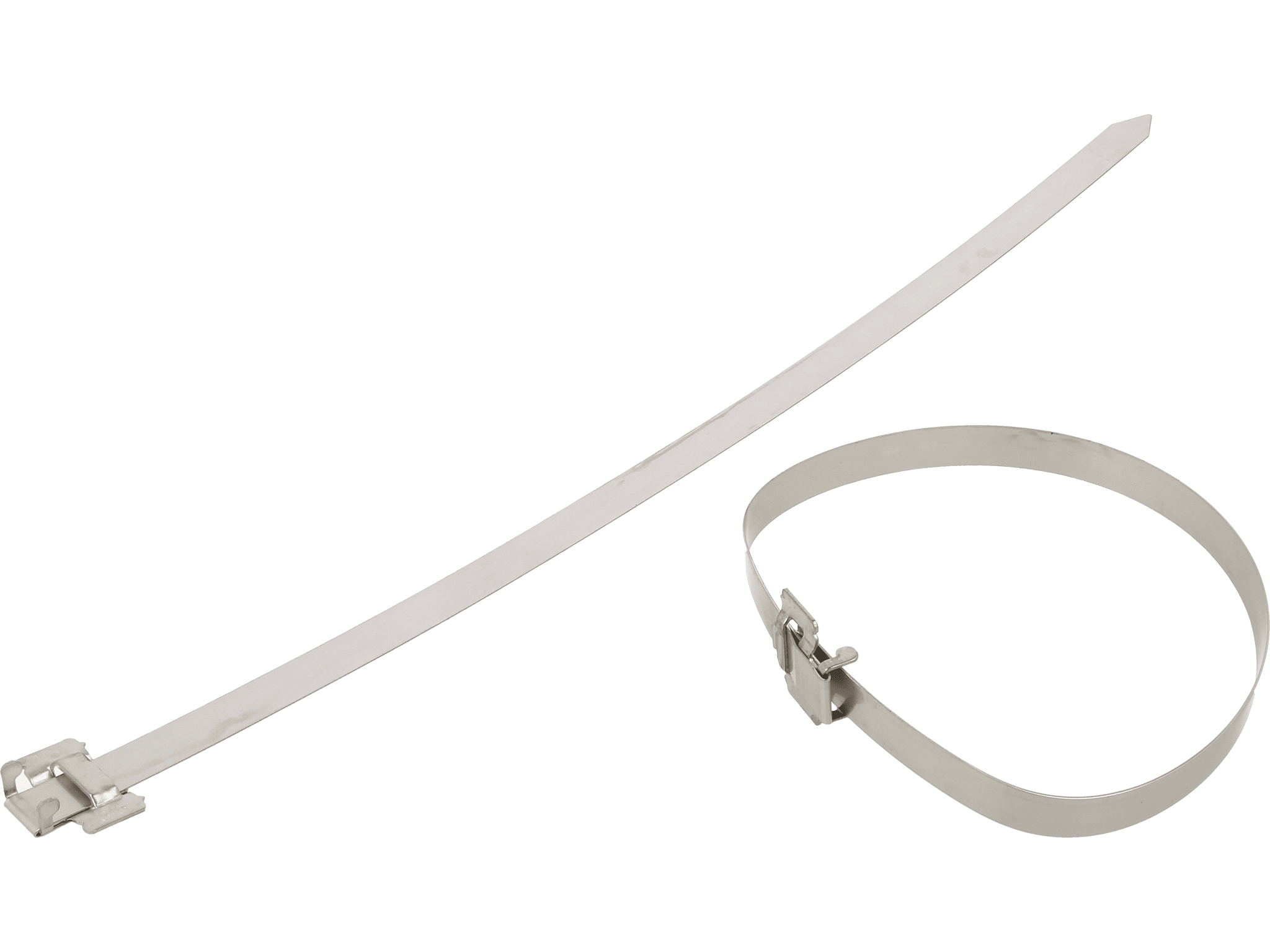 Stainless steel cable ties demonstrate extensive thermal tolerance.
Self-adhesive and screwed cable tie holders
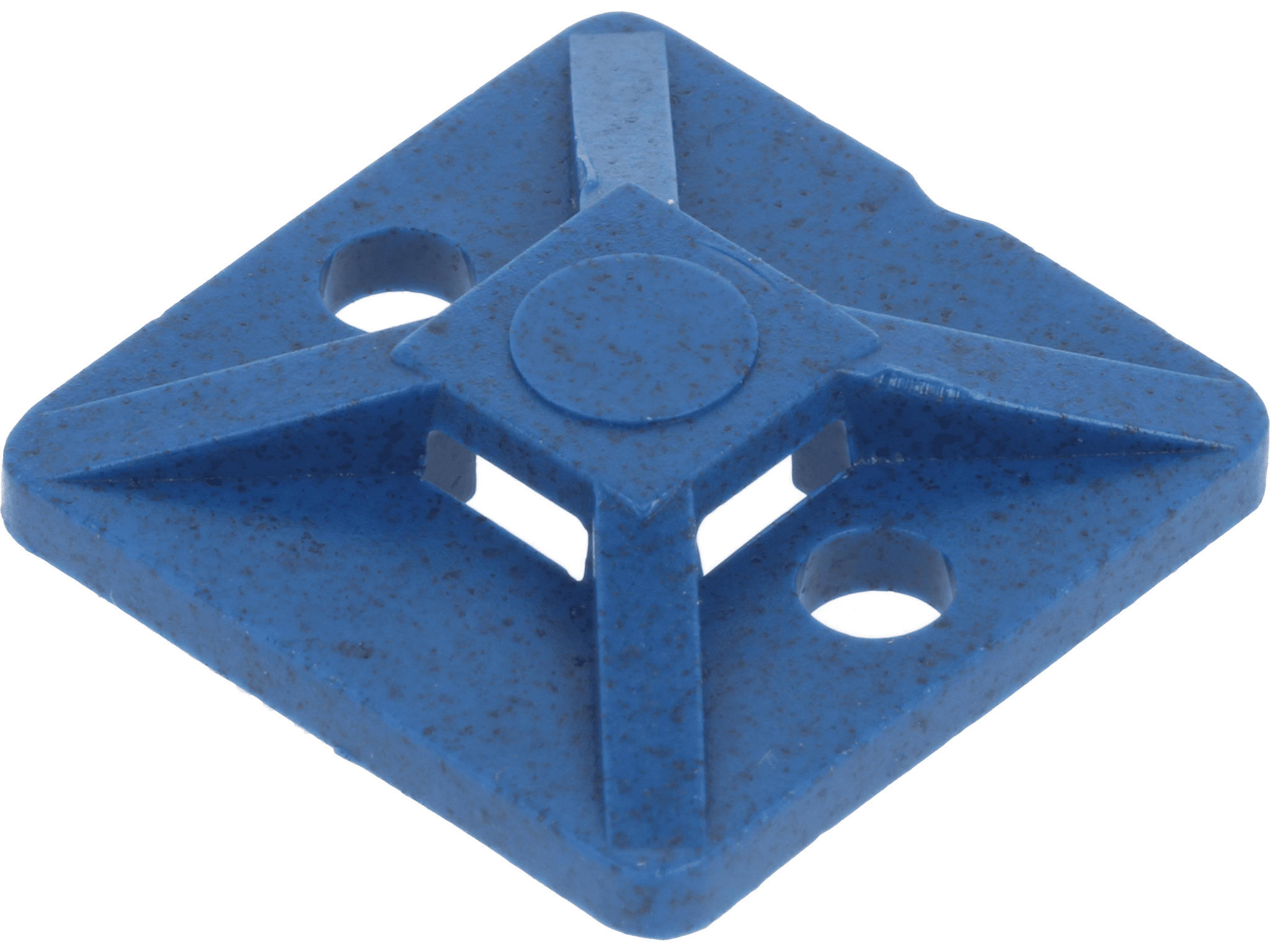 Typical holder designed to fix cable ties with screws or a self-adhesive layer.
Cable tie holders are designed to attach cable harnesses, protective conduits, etc. to surfaces. Numerous product models offered by HellermannTyton come in a cross-shaped form, where the square base has holes (for screws), and two pairs of slots are placed in the central part for threading a cable tie through. Additionally, many of them come with an adhesive layer on the bottom to facilitate installation without drilling any holes. Other holder types have a single pair of slots or a curved profile facilitating firm attachment of thick cables, tubes or cable ducts. The third variety of holders are fitted with an extension key, which eliminates the need for a mounting screw and streamlines the installation process (this solution is frequently used in vehicles or heavy machinery).
Cable tie mounting tools
Cable tie mounting tools (cable tie guns) are designed to accelerate any installation work. They are particularly useful on production lines, and popular with electric engineers creating power supply or communication (including ICT) lines. They tighten cable ties with repeatable (adjustable) force and cut them automatically in such a manner as not to leave any sharp edges near the head. As a result, the fixing is secure, properly finished, and protects cables against damage (a risk existing with manual installation and accidental over-tightening).
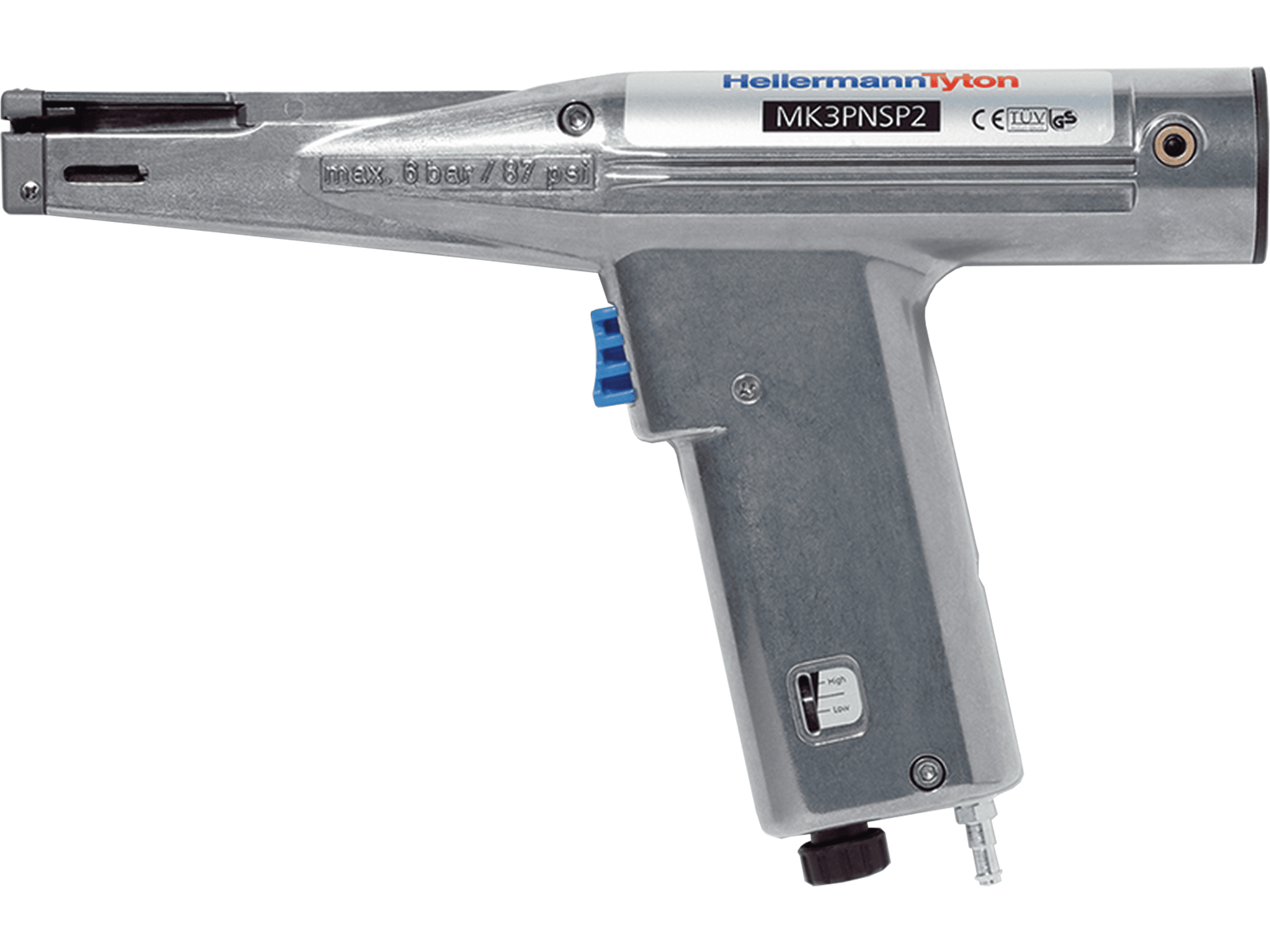 Pneumatic mounting tool for automotive applications.


HellermannTyton mounting tools are designed to handle cable ties with a width reaching 13 mm (selected models). In the majority of tool versions, the knob located over the handle is used to adjust the tensioning force. In order to reduce hand fatigue and ensure work ergonomics, the manual mounting tool trigger is profiled in a manner facilitating operation with four fingers. Moreover, the manufacturer provides a special model operated with compressed air.
Accessories and parts
Each user should also check out the tool designed to remove (i.e. cut safely) cable ties. Its face comes with a slot in which a cable tie must be placed. Once you press the trigger, a special blade cuts a plastic tie. Its length ensures that the objects secured with the cable tie (e.g. cables) remain undamaged. Its operating principle is presented in the video clip mentioned below.
Additionally, the TME catalogue features accessories and spare parts, such as blades and protective holsters (nose pieces). These products are standard consumables. They ensure optimum performance and extend the service life of tools, especially if they are subjected to intensive use.
Heat-shrink sleeves and fittings
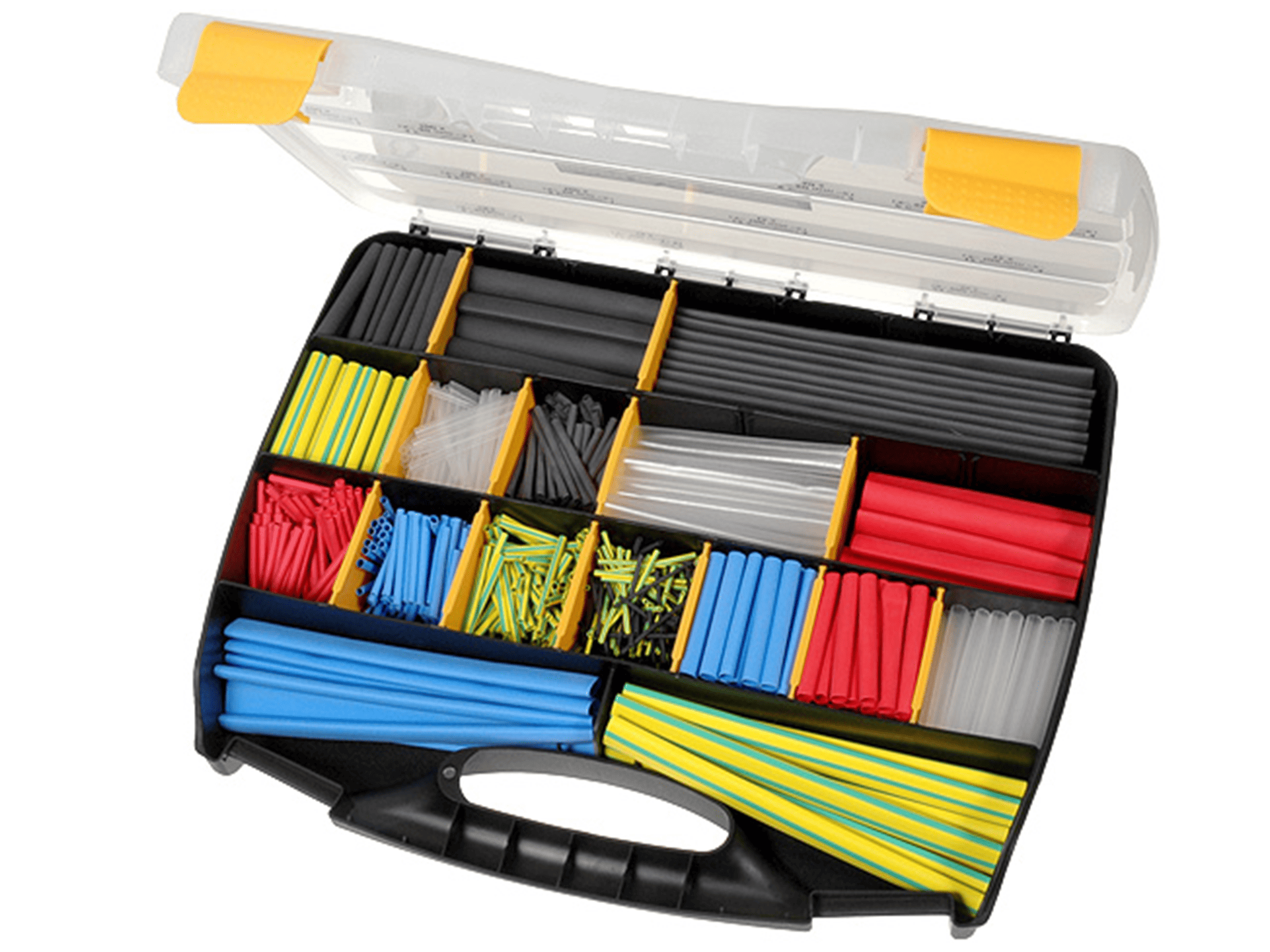 Set of heat-shrink sleeves with an organiser.
No self-respecting technician can make do without heat-shrink components. HellermannTyton specialises in manufacturing such products. Its classic solutions come in diameters from 1.2 mm to 180 mm, and their heat-shrinking ratios range from 2:1 to 6:1. Even though this assortment includes products designed for individual applications, most of the materials offered are available in long sections (provided on reels or in cardboard boxes) up to 300 m, which is the most convenient format for manufacturing plants. The manufacturer also offers heat-shrink sleeve sets (even 778 pieces) including short segments of various cross-sections, and a plastic organiser.


Special heat-shrink components are internally coated with an adhesive substance enhancing their surface adhesion to ensure additional tightness. This solution guarantees high durability of connections secured in such a way, as they are protected against moisture and tearing by forces acting in parallel to the cable axis.
Cable repair
Repair sleeves (also coated with an adhesive) consisting of a heat-shrink material sheet and a steel closing profile play a similar role. Such a design makes it possible to handle partially damaged cables in field conditions, when the technician does not have access to cable route terminals, and cutting the cables fully is not an option. Repair sleeves are used, for example, when the external sheath of a cable routed under the ground is damaged as a result of earthworks. They are installed by wrapping the damaged cable with the sleeve and closing it with a profile supplied in the set. Next, a torch is used to heat-shrink the assembly (similarly to regular tubes).


The heat-shrink sleeve assortment also includes a number of complementary products: break-out boots designed to divide cable routes into two or more harnesses, while simultaneously retaining the insulation integrity; fittings used to lay cables at a defined angle or reduce the harness cross-section (ribbed models ensure additional cushioning of connections that are subject to dynamic stresses). The manufacturer also provides caps for temporary and permanent conduit plugging to prevent moisture from penetrating them (capillary effect).
Cable braids and shields
While presenting the HellermannTyton product range, their extensive portfolio of braids and shields must also be mentioned. This assortment encompasses four product groups (listed in the table below), which include braids, tubes, ducts, and accessories that are necessary for their installation. The assortment of braids is not limited to the commonly used polyester mesh solutions. It also includes sleeves made of a polyamide fabric or Nomex®. The latter are non-flammable products that are capable of withstanding temperatures ranging from -60°C to 240°C, designed to create and protect cable harnesses running close to heating elements or exposed to extreme weather conditions. Most of the products made of PET are also fire-resistant. The provider’s solutions are used in industrial equipment, rail and air transport applications, etc. Selected products conform to the EN1299 and ISO3457 standards regarding resistance to agents present in heavy machinery.


Protective tubes/conduits
Firstly, note the HelaGuard series is divided into several product subseries, which are divided mainly based on the materials the products are made of, e.g. plastics (PVC, polypropylene, polyamides) and/or stainless and acid-resistant steel. The former include products protecting cable harnesses in robot-assisted and automation systems, which demonstrate high flexibility (FlexiGuard group) and are padded in a manner reducing any internal friction. Certain products (e.g. HelaGuard LTS) are made of materials that are resistant to petrol and most acids and lubricants, factors present in petrochemical processing plants, factories, machinery operated by hydraulic cylinders, etc. On the other hand, the stainless steel tubes provide unsurpassed mechanical durability and thermal resistance (even up to 600°C for HelaGuard SSC).
Spiral wrappings (protective hoses)
Apart from tubes, the supplier’s product portfolio also includes Helawrap spiral wrappings (protective hoses) designed for cable management purposes in locations where harnesses must be split frequently. They are made of plastic and come in cross-sections ranging from 8 mm to 30 mm. They are delivered with a special opening accessory facilitating installation – see the video clip below. Spiral wrappings are particularly useful for communication/ICT cabling management, both in offices and in server rooms. A similar role is played by the HellermannTyton cable ducts (sizes up to 40 mm) designed to be mounted with screws or a self-adhesive layer.
Accessories
The above-mentioned HelaGuard and Flexiguard tube series include a number of complementary products, such as T- or Y-shaped connectors and terminations, designed similarly to glands and playing the same role to ensure continuous and tight protection. The manufacturer also provides fixing brackets for conduits and cable ducts facilitating the installation of complete systems with compatible and perfectly fitting components.
Markers and labels
Even relatively simple systems require correct labelling, which is necessary to create understandable documentation and facilitates scaling as well as maintenance/servicing activities. TME offers a full selection of the HellermannTyton labelling elements. Their most numerous group includes snap-action markers placed on cables with diameters ranging from 0.8 mm to 9 mm. They are available in sets and reels. Identification symbols placed on their surfaces may include alphanumerical inscriptions or typical pictographs or abbreviations used in power supply systems (PE, L1, N, etc.). Moreover, selected products come in standard, internationally approved colours (brown/black/grey for phase conductors, blue for neutral conductors, and yellow for protective conductors).


HellermannTyton offers interesting solutions for manual cable labelling. If complex data transmission or communication lines need to be labelled, installers often use special printers. However, in many cases, manual cable labelling turns out to be the optimum method, as, in practice, it is cheaper and faster.


HellermannTyton offers an in-between solution, i.e. plastic self-laminating labels and labels designed to be attached to cables. The former are presented in the video clip below – they facilitate not only ergonomic, but also permanent cable labelling. Their transparent plastic coating ensures that inscriptions remain resistant to moisture, dust and even hard-to-remove dirt.
Labels/markers designed for threading cables or systems using cable ties are made of polyamide or polyolefine. They are perfect for locations offering large space for cabling management, as well as conduits and cables of relatively large diameters. With a length ranging from 19 mm to 100 mm, they facilitate creating longer descriptions of conductors. As the table shows, HellermannTyton also provides special markers (pens) with fast-drying permanent ink that is suitable for writing on slippery plastic surfaces.
Expansion tools
Expansion tools are complementary to the above-mentioned products, in particular to protective conduits and hoses. They come with a pointed blade with three prongs. Squeezing the handle results in prong expansion to widen the protective conduit clearance to facilitate cable routing. The prongs are then closed automatically. This tool comes in several versions of a similar format, but with various expansion ranges (from 1.25 mm to 17 mm of the diameter). These simple but indispensable accessories are used to install cable grommets, markers or gland seals to facilitate servicing, as well as running production processes and performing numerous electric installation tasks.
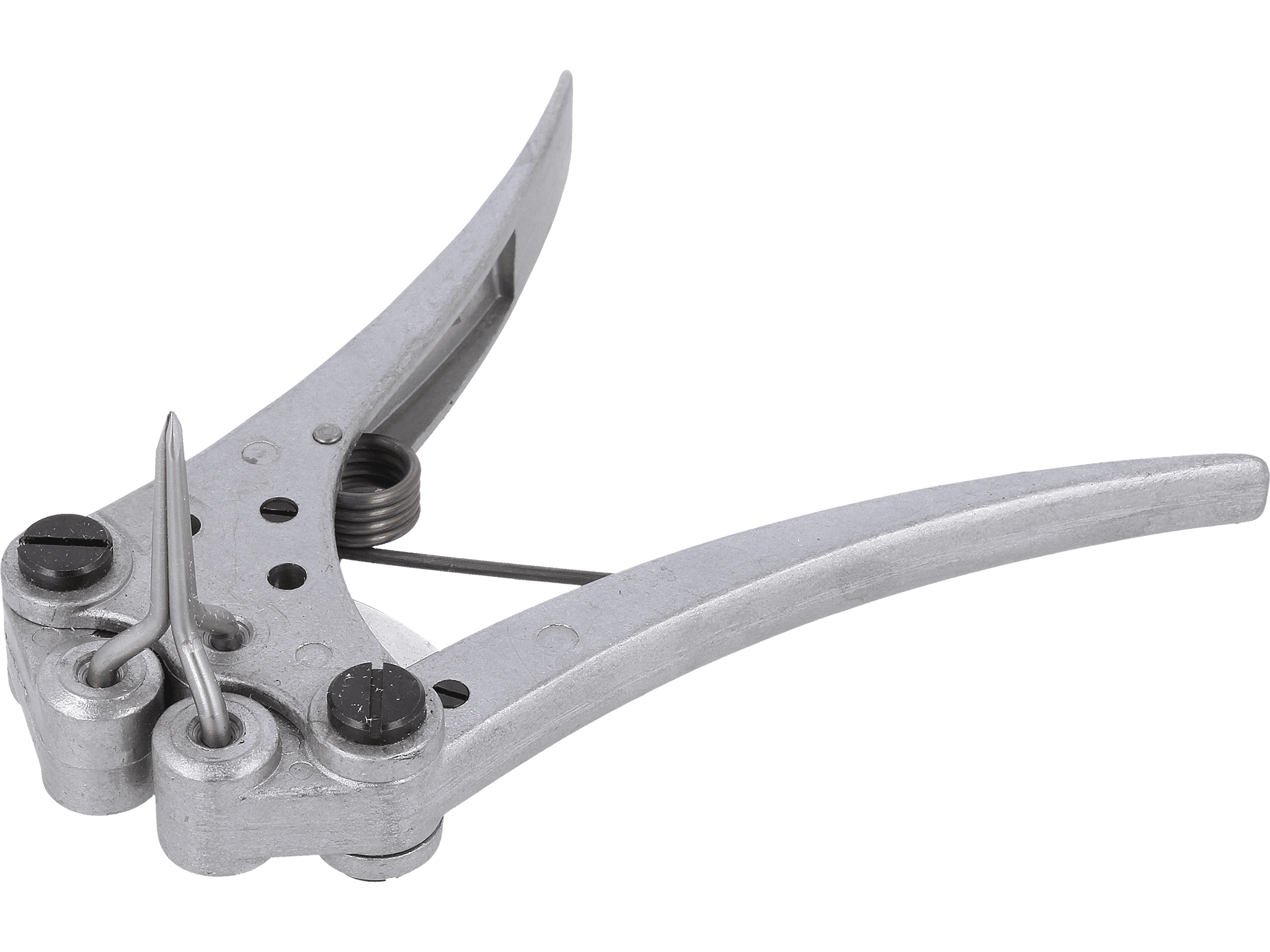 Expansion tools are characterised by a simple, but durable design.
Strain reliefs and grommets
The final, broad group of HellermannTyton products includes components securing cables routed through walls and panels. These are grommets and strain reliefs, i.e., respectively, rings made of soft plastic preventing the outer sheath from coming into contact with sharp edges, and sleeves cushioning the angular cable tensions (guiding cables within a smoother curve). Both these products are made of black, flexible PVC, with a 3–14 mm diameter hole, and are designed to be mounted in 6–19 mm openings (maximum strain relief length is 85 mm). The manufacturer provides models designed to be mounted in walls with a thickness up to 6.5 mm. Moreover, workshops, service centres and DIY enthusiasts can also purchase a set of diverse components that are sufficient to implement custom projects, create prototypes and make typical repairs. Table of photos: