Does the Raspberry Pi require temperature sensors for control?
Does the Raspberry Pi require temperature sensors for control?
No, the Raspberry Pi has built-in chip temperature measurement and autonomous protection mechanisms, so no external sensors are needed to control its own thermals. The system and firmware monitor the SoC's temperature in real time and reduce clocking if necessary to prevent overheating.
How the Raspberry Pi controls its own temperature
All modern models have a temperature sensor integrated into the SoC. Its readings are visible to the operating system, which triggers protective procedures on this basis. When the temperature exceeds the safety threshold, so-called "throttling" is activated. when the temperature exceeds the safety threshold, so-called throttling is activated - an automatic reduction in the CPU/GPU frequency that stabilises the device at the expense of performance. In practice, the first indication that cooling is insufficient is the performance drops under load caused precisely by thermal throttling. For the user, this means that the sensor itself is 'already on board' and the system responds without additional hardware.
What changes the Raspberry Pi 5 and when cooling is needed
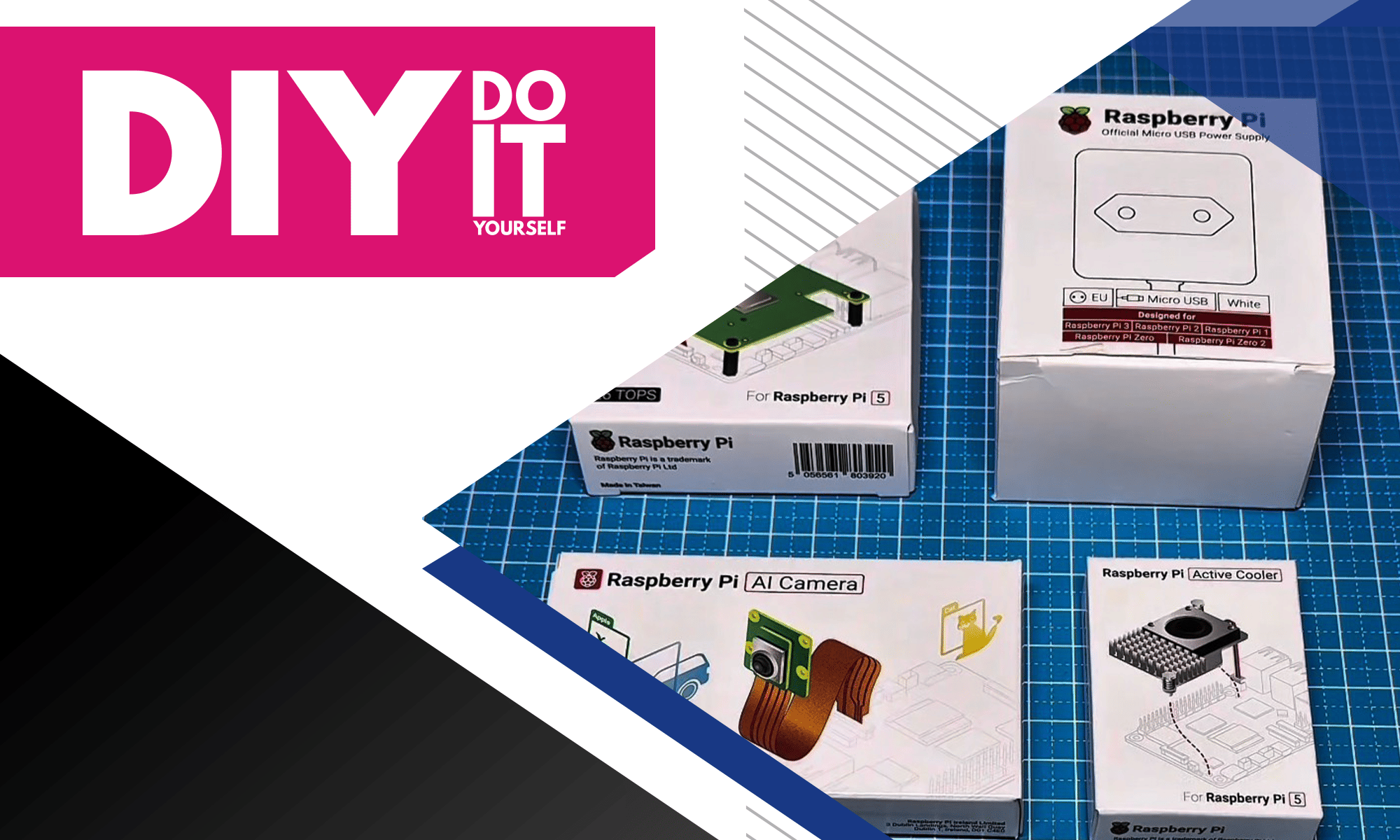
The Raspberry Pi 5 has significantly higher performance than the Pi 4, but requires better thermal and energy management. For intensive use, active cooling is practically standard to maintain constant clocking without throttling, and a 27 W (5.1 V/5 A) power supply is recommended to provide power backup for the board and accessories. If the cooling or power supply is at its limit, throttling messages and performance drops will occur more quickly - a signal that you need to improve airflow or power supply rather than fitting an additional temperature sensor. The built-in monitoring will detect the problem anyway and respond by limiting the frequency.
How to check temperature and diagnose throttling
Raspberry Pi OS provides a reading of the SoC temperature and the status of the protection mechanisms at system level. If you notice 'throttling' under load, check for throttling - this is usually the result of exceeding the thermal threshold or power supply issues. From a diagnostic point of view, this is more meaningful than adding separate sensors, as we are just interested in the temperature of the Integrated circuits themselves and not just the air in the Enclosures. In practical scenarios, improved cooling (Heatsinks, fans, venting arrangement) restores full performance without any additional sensors.
When external sensors make sense
Additional temperature sensors are only needed if you want to measure the operating environment rather than control the Raspberry Pi itself. In industrial installations or Enclosures with poor airflow, measuring the ambient temperature helps to design cooling and alert you to anomalies. To protect the board itself, however, they are not required: the SoC's built-in sensor, along with throttling mechanisms, will act as a last line of defence anyway, signalling the need for improved cooling or power supply.
Transfer Multisort Elektronik (TME) is one of the world’s largest global distributors of electronic components, electrotechnical parts, workshop equipment, and industrial automation. The catalog includes over 1,500,000 products from 1,300 leading manufacturers. TME’s modern logistics centers in Łódź and Rzgów (Poland), with a combined area of over 40,000 m², ship nearly 6,000 packages daily to customers in more than 150 countries.
TME also invests in the development of knowledge and skills of young engineers and electronics enthusiasts through the TME Education project, and supports the tech community by organizing the TechMasterEvent series, promoting innovation and experience exchange.