Does the Raspberry Pi overheat? Does it need cooling?
Does the Raspberry Pi overheat? Does it need cooling?
Yes, the Raspberry Pi can overheat - especially in newer models such as the Raspberry Pi 5 - and so cooling, especially active cooling, is highly recommended and, in many applications, even essential.**
Operating temperature vs. performance
Each processor in the Raspberry Pi has a specific safe operating temperature range. For the BCM2711 (Raspberry Pi 4) and BCM2712 (Raspberry Pi 5) series chips, the temperature limit is 80°C, beyond which the mechanism thermal throttling is activated. This means that the system automatically lowers the processor's clocking to reduce heat generation and prevent damage to the chip. Symptoms of throttling include noticeable system slowdowns, decreases in interface fluidity and lower application responsiveness. Although this mechanism protects the hardware, in practice it limits the Raspberry Pi's real-world performance, especially during long-running tasks such as compiling code, playing 4K video, working with an emulator or operating multiple tabs in a browser.
Differences between models
In older models, such as the Raspberry Pi 3 and Pi Zero, overheating occurred rarely and only in extreme cases. The Raspberry Pi 4 significantly increased the processing power, which was associated with higher heat emission. In this model passive cooling (e.g. an aluminium heatsink) was often sufficient for light to medium loads. The Raspberry Pi 5, on the other hand, runs at 2.4GHz by default, which significantly raises its base temperature. Even at rest the core temperature can reach around 50-55°C, and at full load it rapidly exceeds 80°C. In practice, this means that active cooling (i.e. with a fan) is a must. Without it, throttling occurs after only a few seconds of intensive operation.
Effectiveness of cooling
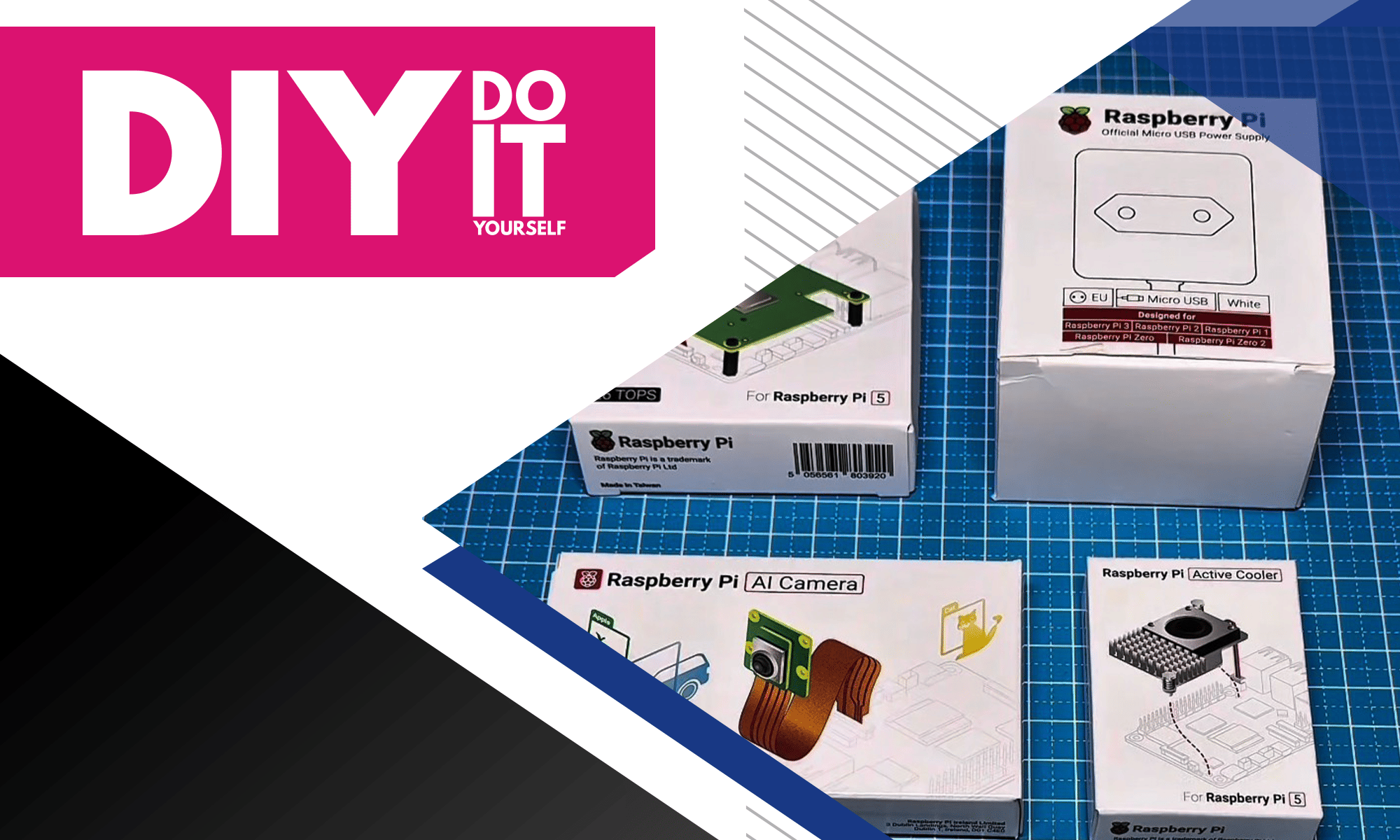
Tests show that Heatsinks reduce system temperatures by 5-10°C, but their effectiveness depends on ensuring adequate airflow. In a closed enclosure without ventilation, its performance may be insufficient. The Raspberry Pi 5 features a dedicated PWM connector for the fan, which allows the speed to be intelligently controlled according to the CPU temperature. The official Active Cooler, which is an active cooling kit, is able to keep the CPU temperature below 40°C even at full load. This level of cooling allows you to get the most out of your hardware - both in desktop and server applications.
Are you always in need of cooling?
If the Raspberry Pi is working in light tasks such as home automation, GPIO control or sensor data processing actively cooled is not necessarily, as long as the minicomputer is well ventilated. However, when working under load for a longer period of time, e.g. as a mini-server, game emulator or PC for everyday use, then the lack of cooling leads to a decrease in performance and shortened hardware life.
Transfer Multisort Elektronik (TME) is one of the world’s largest global distributors of electronic components, electrotechnical parts, workshop equipment, and industrial automation. The catalog includes over 1,500,000 products from 1,300 leading manufacturers. TME’s modern logistics centers in Łódź and Rzgów (Poland), with a combined area of over 40,000 m², ship nearly 6,000 packages daily to customers in more than 150 countries.
TME also invests in the development of knowledge and skills of young engineers and electronics enthusiasts through the TME Education project, and supports the tech community by organizing the TechMasterEvent series, promoting innovation and experience exchange.