Microchip Technology systems managing battery charging
Microchip Technology systems managing battery chargingDate of publication: 29-10-2026 🕒 6 min read
The success of portable and battery-powered devices continues unabated. This popularity drives the demand for systems ensuring safe battery operation, especially in terms of charging, and Microchip Technology offers a wide and diverse selection of solutions.
Microchip Technology's range of charging systems combines simple, highly integrated charging controllers with more advanced programmable solutions, allowing for the creation of custom charging algorithms. A significant portion consists of compact, affordable components for portable devices. The manufacturer describes them as reliable and highly miniaturized solutions with precise voltage regulation. They require few external components. Moreover, they are easy to integrate, simple to control, and natively support the most popular standards, primarily USB.
Below, we examine the key features and capabilities of these systems.
Charging Systems from Microchip Technology
Key Features of Charging Systems
Before describing specific product groups from Microchip Technology, let's look at some key properties of charging systems.
Number of Supported Cells
Microchip Technology's offering primarily includes systems for charging single cells (1S), as such power sources are most commonly used in mobile electronic devices. More cells connected in parallel and series are typically found in power tools and other equipment with higher energy demands, but the supplier also offers solutions for 2S packs. The MCP732xx series products allow for multi-cell battery management.
Cell Chemistry
This refers to the technology of their construction. The most popular are lithium-ion (LiIon) and lithium-polymer (LiPol). Selected systems are adapted for LiFePO4 batteries, which require a lower final charging voltage. The choice of system should consider both the cell chemistry and the required charging voltage.

| Technology | Microchip Solutions Characteristics | Typical Applications |
|---|---|---|
| Li-Ion | Controllers with CC/CV algorithm and charging process supervision | Portable electronics, IoT |
| Li-Polymer | Similar solutions to Li-Ion, considering cell requirements | Wearables, mobile devices |
| LiFePO4 | Systems adapted to lower final charging voltages | Industrial systems, backup power |
| NiMH / NiCd | Controller and reference solutions with appropriate charging algorithm | Consumer equipment, specialized devices |
| Lead-acid batteries | Programmable energy conversion and charging supervision systems | Emergency power systems, industry |
Charging Current
The diversity of charging currents is important as it directly relates to safety, but also user convenience (shorter charging time, but without excessive cell heating). The offering includes systems with various capabilities – from solutions for small batteries to systems achieving up to 1A efficiency.
Final Charging Voltage
Various output voltage options are available, from 4.1V to 4.4V for single cells and correspondingly higher values for 2S packs.
Type of Charging System
The offering is dominated by linear charging systems, often integrating a power transistor and current measurement and control elements. This allows for reducing the number of external components and simplifying design, especially for devices where dimensions significantly limit available PCB space.
Power Source Management
Most systems perform battery charging, while selected higher-class models additionally offer Power Path functionality, meaning simultaneous system power supply and battery charging. Thus, they manage the energy supplied by the power source, similar to PMIC systems.
Protections and Process Control
Charging systems are equipped with various protective and control mechanisms. The most important, widely used in Microchip Technology solutions, include: temperature control, voltage protections (overvoltage), lockout at too low voltage, pre-charging (for deeply discharged batteries), and end-of-charge control. One of the basic protections is also reverse current protection.
Housing and Integration Level
An important feature of Microchip Technology's offering is the very wide selection of systems with compact dimensions. The systems come in small SMD packages. Combined with high integration reducing the need for additional components, this makes it easier to find products tailored to the needs of miniaturized devices.
Capabilities and Types of Microchip Technology Systems
The basic functionality of Microchip Technology's charging systems boils down to the universality of this offering. This was achieved by combining several features.
Programmable Parameters
This significant advantage allows the implementer to precisely tailor the system's operation to the requirements of a specific project. Moreover, it enables the wide use of solutions with which designers are well acquainted in terms of operation and parameters. Programming is done using external components connected to the charging system's pins – adjustable values include:
- charging current value;
- pre-conditioning conditions for the cell;
- end-of-charge threshold;
- selection of hysteresis, threshold values;
- safety timers (cease charging when the cell does not absorb energy).
In addition to programming operating parameters, systems can also signal their status via output signals, e.g., an analog output proportional to the charging current.
Power Path Functionality
In selected systems (e.g., MCP73871), we find the function of load sharing between circuit power supply and battery cell charging. Such management means that the system can operate from an external power supply while the battery is charged in the background. This is a very useful feature in embedded systems and one of the characteristic features of Microchip Technology's offering. This functionality is particularly important in devices that should not interrupt operation when connecting or disconnecting the charger.
Small Packages
As already noted, Microchip Technology's offering includes systems intended for portable and extremely miniaturized devices. Therefore, it includes, among others, charging controllers such as MCP73830 in a TDFN (DFN8) package with dimensions of 2x2 mm.
Key product groups:
| Solution Group | Example Systems | Main Applications |
|---|---|---|
| Simple linear charging controllers | MCP73830, MCP73831, MCP73832 | Portable devices, consumer electronics, small IoT devices |
| Controllers with advanced charging supervision | MCP73833, MCP73837, MCP73113 | Battery-powered devices requiring temperature, state, and charging process control |
| Controllers with Power Path Management | MCP73871 | Devices allowing simultaneous battery charging and system operation |
| Controllers for different cell chemistries | MCP73123, MCP73223, MCP1631 | Li-Ion, Li-Polymer, LiFePO4 batteries, and multi-chemistry solutions |
| Programmable converters and pulse charging controllers | MCP1630, MCP1631, MCP19111, dsPIC DSC | Higher power chargers, industrial systems, multi-cell battery packs |
MCP738xx Series
The MCP738xx series systems are part of a particularly wide range of solutions designed for charging single-cell lithium-ion and lithium-polymer batteries.
These are highly integrated, linear chargers, which can offer, among others:
- power supply from a USB input or a mains adapter;
- automatic power source selection;
- the ability to select USB charging current in the range of 100…500mA.
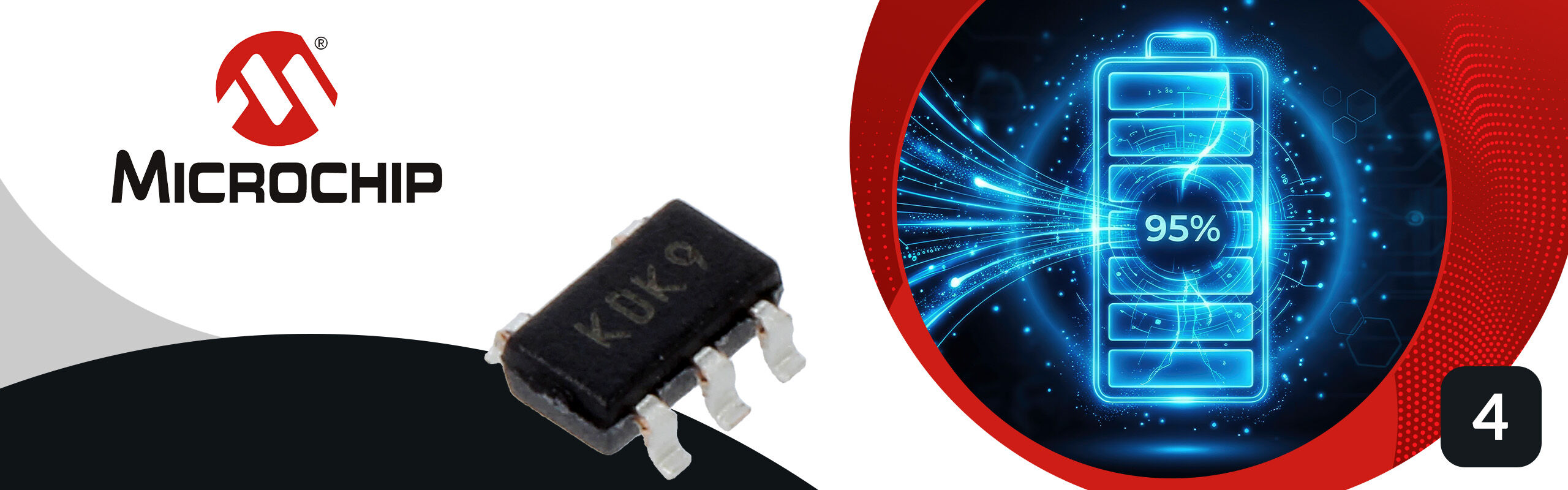
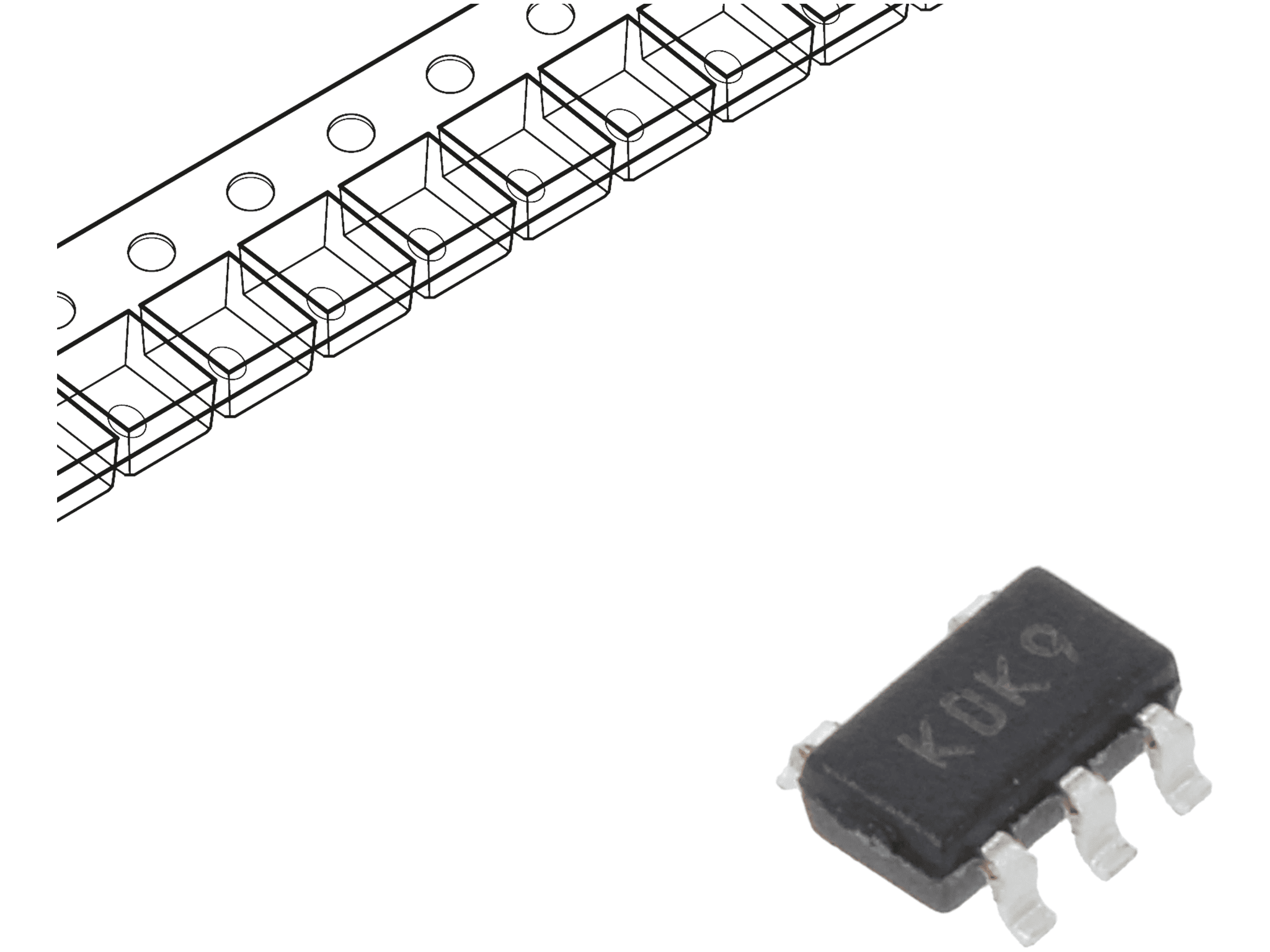 Selected models are available in subminiature SOT23-5 packages.
There are differences in electrical parameters (e.g., charging current, final voltage), additional functions (status signaling, thermal control, etc.), and configuration methods among the various models within the series. MCP738xx systems are available in compact SMD packages, such as SOT-23, DFN, and MSOP, making the MCP738xx family suitable for use in the most modern devices, such as consumer electronics, measuring equipment, etc.
MCP732xx Chargers
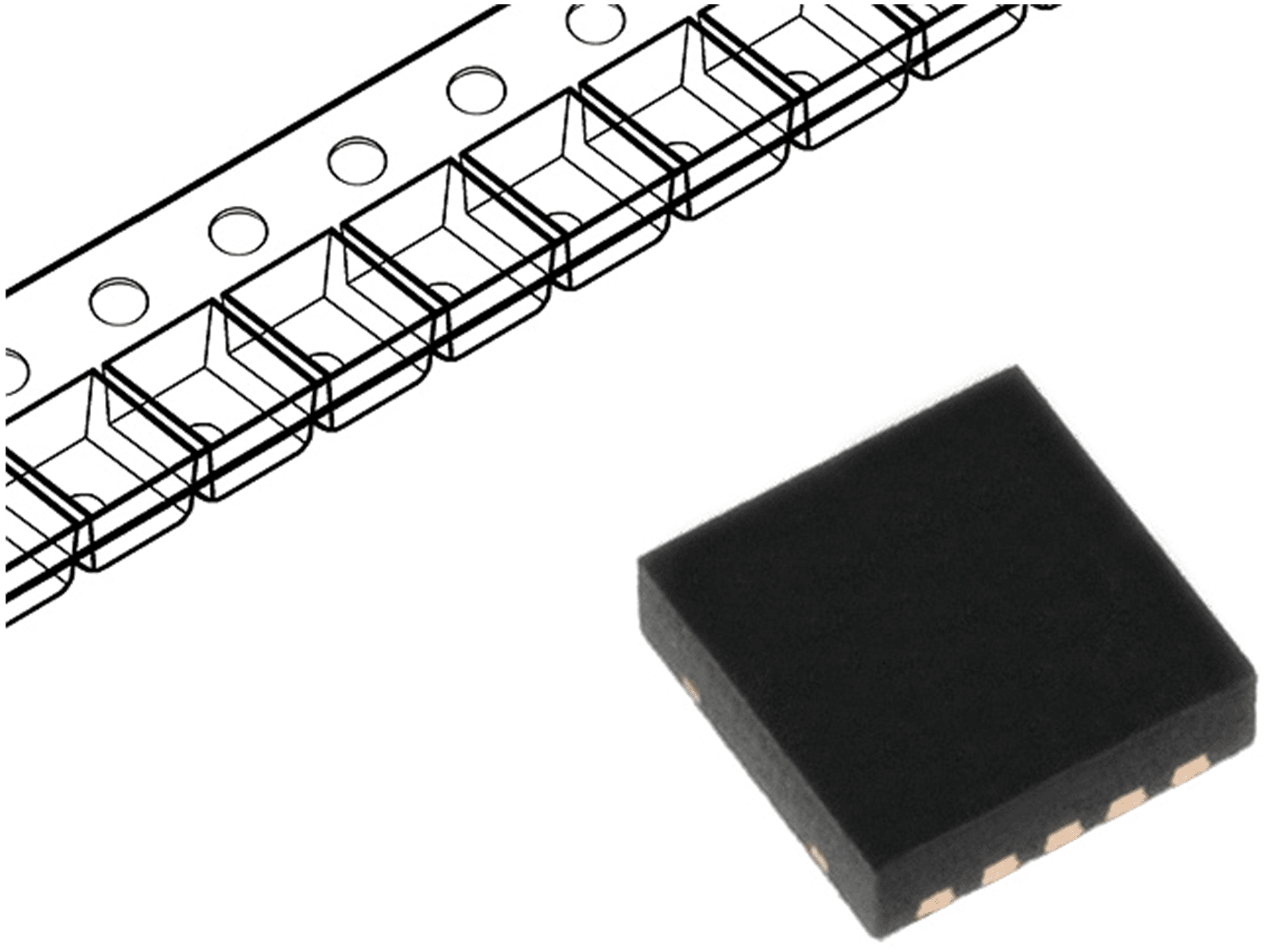 All MCP732xx systems use the DFN10 package.
The MCP732xx family includes linear systems designed for charging dual-cell lithium batteries. The TME assortment includes base models MCP73213 and MCP73223, adapted to various voltage configurations and cell chemistries. The systems use the CC/CV algorithm, i.e., charging with constant current and then constant voltage. Depending on the variant, the family supports lithium-ion, lithium-polymer, or LiFePO4 batteries. The maximum charging current is up to 1.1A, and the final voltage is tailored to the characteristics of the given pack.
The systems include, among others, a power transistor, current measurement circuit, and input overvoltage protection. They also feature thermal supervision peripherals and safety timers (including automatic charging resumption), which significantly increase charging safety.
All MCP732xx systems are available in compact DFN10 packages measuring 3x3mm (with edge-mounted leads), facilitating their integration into devices with limited mounting space.
Transfer Multisort Elektronik (TME) is one of the world’s largest global distributors of electronic components, electrotechnical parts, workshop equipment, and industrial automation. The catalog includes over 1,500,000 products from 1,300 leading manufacturers. TME’s modern logistics centers in Łódź and Rzgów (Poland), with a combined area of over 40,000 m², ship nearly 6,000 packages daily to customers in more than 150 countries.
TME also invests in the development of knowledge and skills of young engineers and electronics enthusiasts through the TME Education project, and supports the tech community by organizing the TechMasterEvent series, promoting innovation and experience exchange.