Reliable wireless communication
Reliable wireless communicationDate of publication: 01-09-2021 🕒 6 min read

Thanks to the development of wireless technologies, the availability of communication modules using UHF and SHF radio waves has increased. Some benefits of these solutions include: detailed and international standardization, ease of implementation and relatively high immunity to interference (mainly due to narrow frequency bands in which transmission occurs). Thanks to these advantages, standards such as Wi-Fi, Bluetooth or LTE are already used not only in typical applications, such as wireless audio transmission or Internet access from mobile devices, but also in industrial applications or public infrastructure (monitoring of traffic, weather conditions, etc.). There is another important feature of modern wireless communication systems: energy efficiency. Low energy demand makes it possible to construct IoT (Internet of Things) devices or other mobile transmitters/receivers (e.g. systems designed to control a car fleet). And although the applications for communication modules differ from each other, they require one common element: appropriate antennas. Thanks to them, communication can take place uninterrupted, even in harsh environmental (or atmospheric) conditions – they also make it possible to extend the operating range of many devices and achieve optimal performance.
Ethertronics is known for producing specialised antennas for digital communication modules, as well as phones, tablets, etc. This manufacturer belongs to the American AVX concern, which in turn is part of the Kyocera group, one of the largest Japanese manufacturers of electronic components and devices. For a long time, the number of Etherntronics products in the TME's offer has been constantly growing – these are mainly miniaturised accessories for circuits supporting Wi-Fi, GSM, GPS and many other technologies. Today, we would like to introduce our customers to products from this supplier – we will focus on the main product groups and also on the new products in the TME catalogue.
Ethertronics antennas
Ethertronics antennas can be divided into several categories. In terms of mounting, these will be elements designed to be built-in, mounted outside of the enclosure (or e.g. the driver's cab) and for direct soldering into the PCB circuit. Most of the offered products are dedicated to one particular frequency band (although the same band may be supported by several transmission standards). However, our catalogue also includes antennas that are dedicated strictly to specific communication methods, as well as multifunctional ones (containing more than one radiator and supporting several frequencies/norms). First of all, we will focus on classification according to applications specified by the manufacturer.
ISM antennas – WLAN, Bluetooth, ZigBee...
The ISM band (Industrial, Scientific, Medical) was initially intended for a narrow range of applications. Today, it belongs to the most popular frequency ranges, with Wi-Fi, Bluetooth and the popular ZigBee networks, among others, working within the frequency band range (2.4GHz – 5.8GHz). Ethertronics antennas designed for communication using these standards support linear polarisation (provided for by the above mentioned standards) and are mostly intended for surface mounting. They also come in the form of prototype PCBs, equipped with an SMA connector. They offer energy gain in the range from 1dBi to 4.4dBi, which in many cases (especially in mobile devices) can lead to significant improvement in the transmission quality.
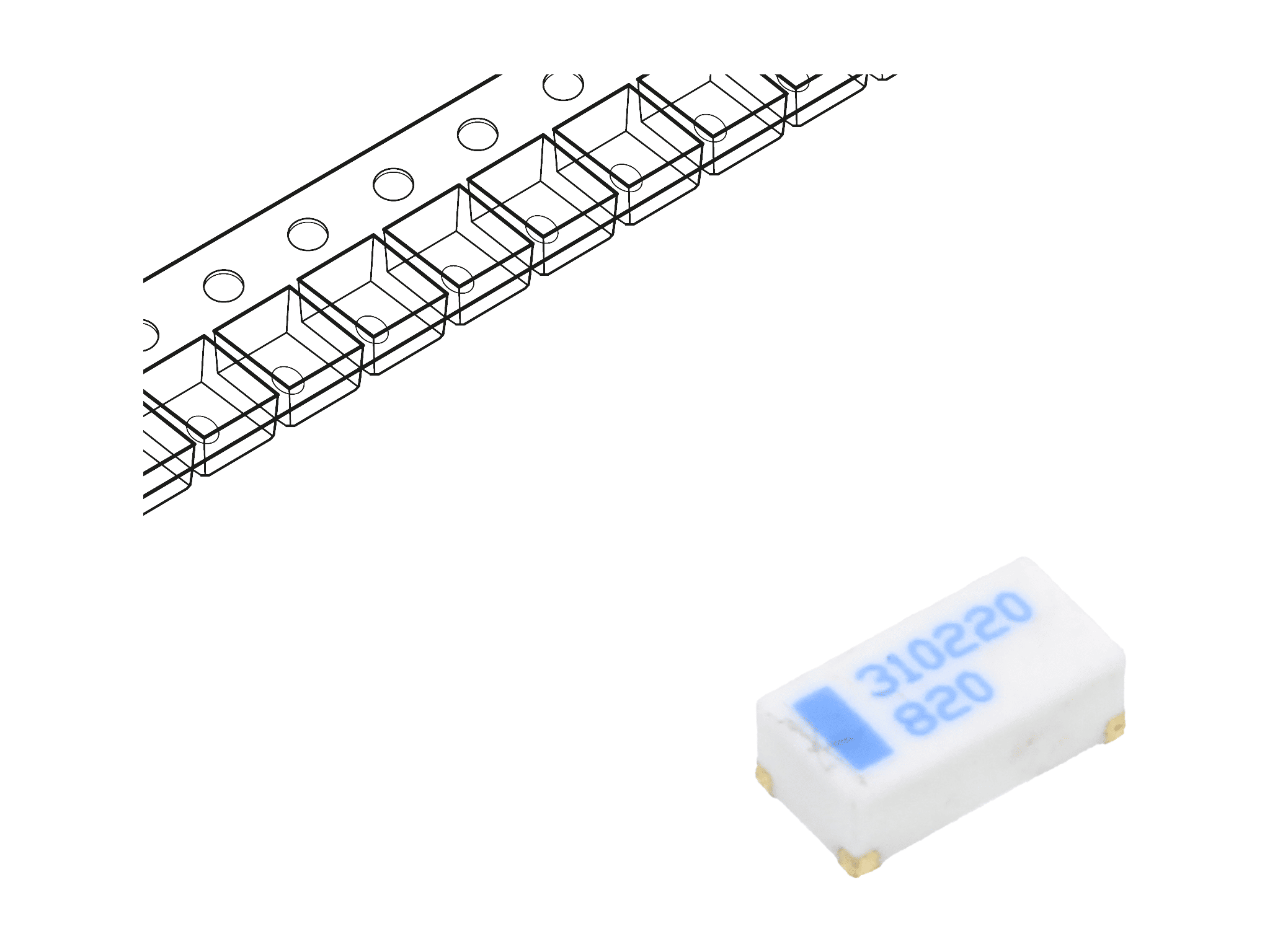 Antenna with 1.7dBi energy gain, base area: 3mm by 1.5mm.
Satellite navigation system antennas
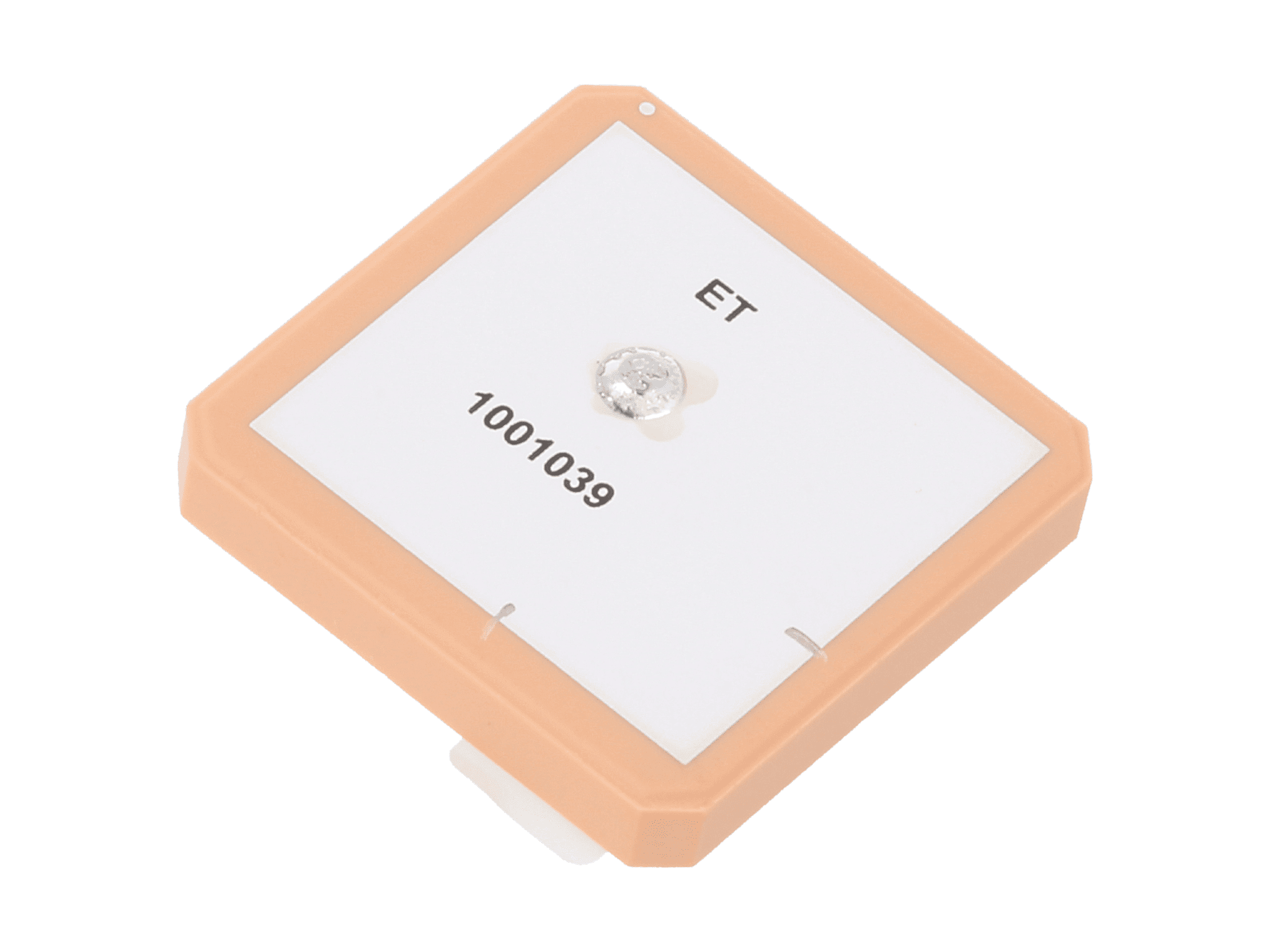 GPS antenna for mobile and IoT devices.
In our catalogue, under the general section "GPS Antennas", there are numerous solutions designed for satellite navigation systems. They allow to receive not only GPS triangulation signals, but also signals from related (competitive) GLONASS (Russian ГЛОНАСС) systems, the second generation BeiDou (China) systems, as well as Galileo (European Union) systems. Just like in the case of communication antennas, we offer a variety of solutions for direct mounting in PCB circuits and an antenna integrated with an active low-noise amplifier (LNA) connected via a coaxial IPEX MHF connector.
Mobile data (LTE)
In the case of mobile devices or devices located beyond the reach of standard wireless communication methods, designers and installers can choose between two solutions: expanding the relay network or using the existing GSM infrastructure. Obviously, for economic reasons, the latter option is much more popular. Data transmission via a cellular network is also an irreplaceable method in the case of alarm systems or on-board public transport ticket machines. The Ethertronics offer available through TME includes GSM and LTE antennas offering gain from 2.7dBi to 6.2dBi – compact, precisely calibrated and equipped with commonly used connectors (including SMA and MMCX, which is often used by producers of USB routers).
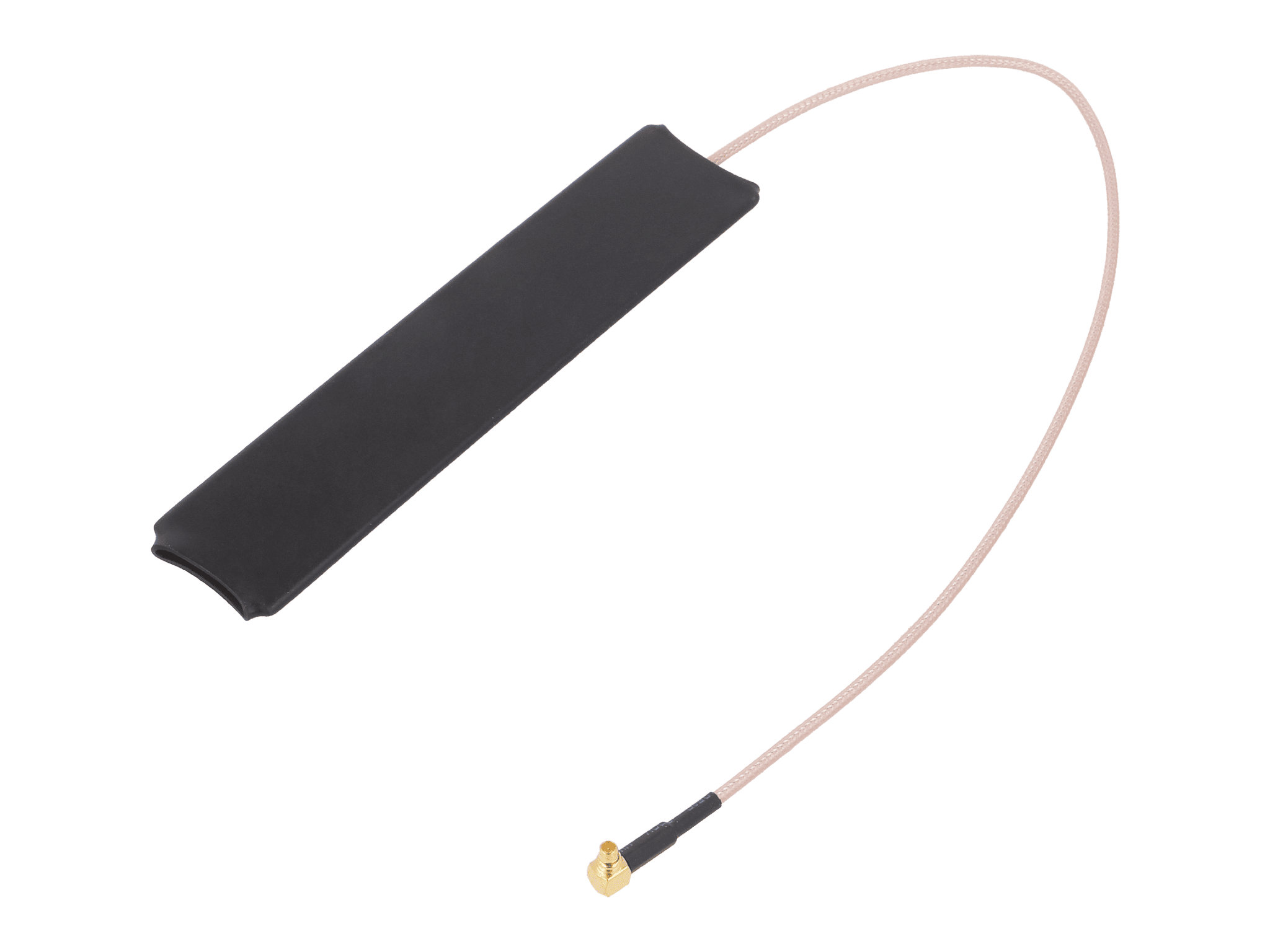 An LTE antenna with MMCX connector.
RF module antennas
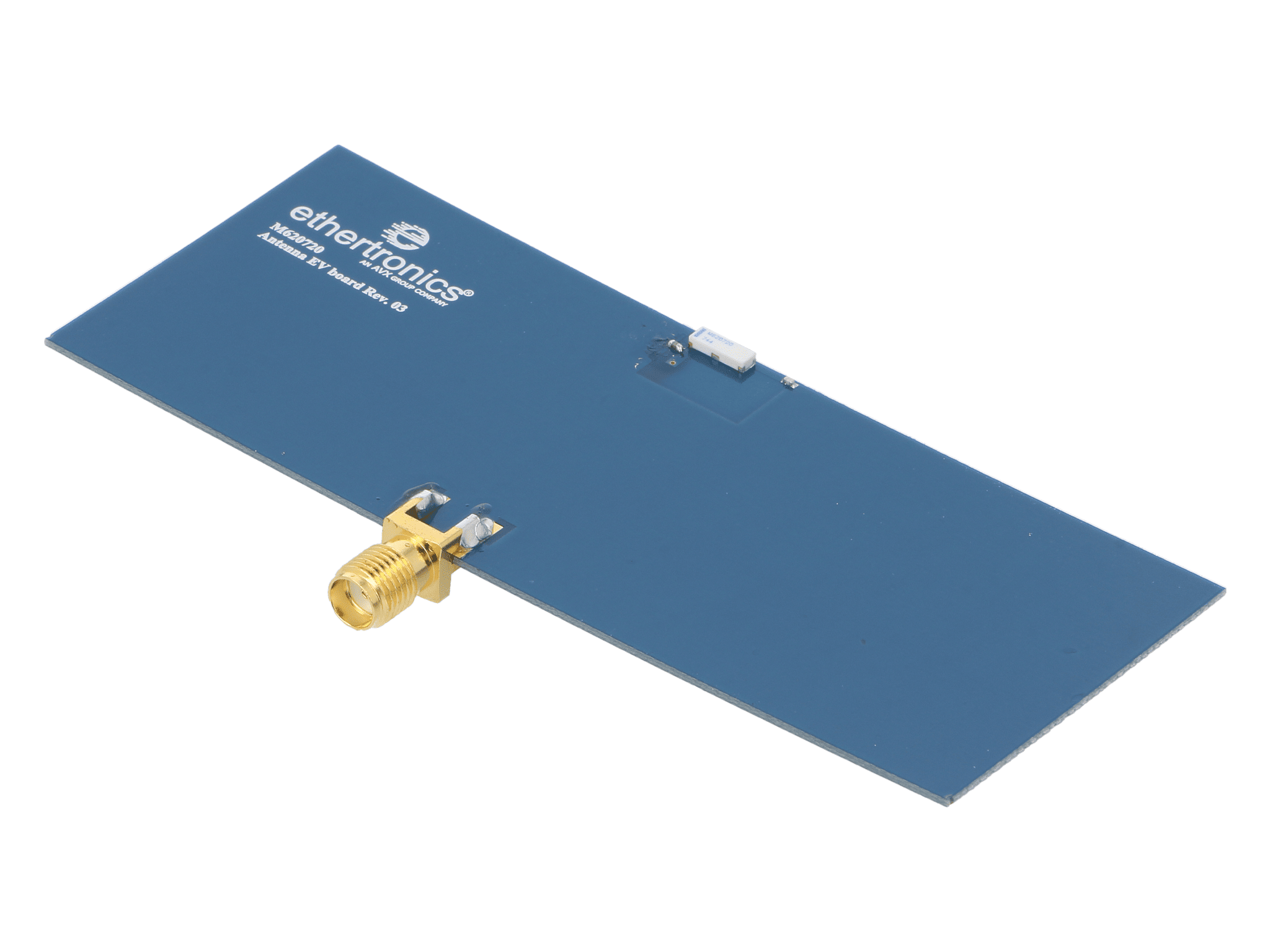 Expansion board including SMD antenna and SMA connector on PCB.
RF antennas are compatible with communication modules with a frequency range from 863MHz to 928MHz. These are very popular, especially for applications transmitting/receiving small amounts of data. They are very reasonably priced and are among the easiest to implement: usually using dedicated libraries that allow configuration and transmission with literally a few lines of code. Ethertronics offers two solutions: a compact antenna in the SMD component format and an expansion board connected via a wire with an SMA plug. The latter is, in fact, a module equipped with an SMD antenna – i.e. a development tool, intended primarily for work with prototypes, tests, etc.
NEW – multifunction antennas/modules
Built-in Ethertronics antennas are new in our offer – they are designed to provide simultaneous support of several communication protocols. They can be connected, for example, to devices placed in a shielded enclosure or improve the transmission/reception quality in vehicles, whose metal cabins absorb radio signals. The antennas have been enclosed in plastic enclosures, and each model supports at least two communication standards. For example, the X1005244LWA3SX10A2 features three antennas, each with a separate, clearly marked SMA lead (on 1m cables). Their target applications are: GPS, GSM, LTE and Wi-Fi. One product will therefore meet the needs of even more complex systems, such as on-board computers or autonomous or remotely controlled industrial machines.
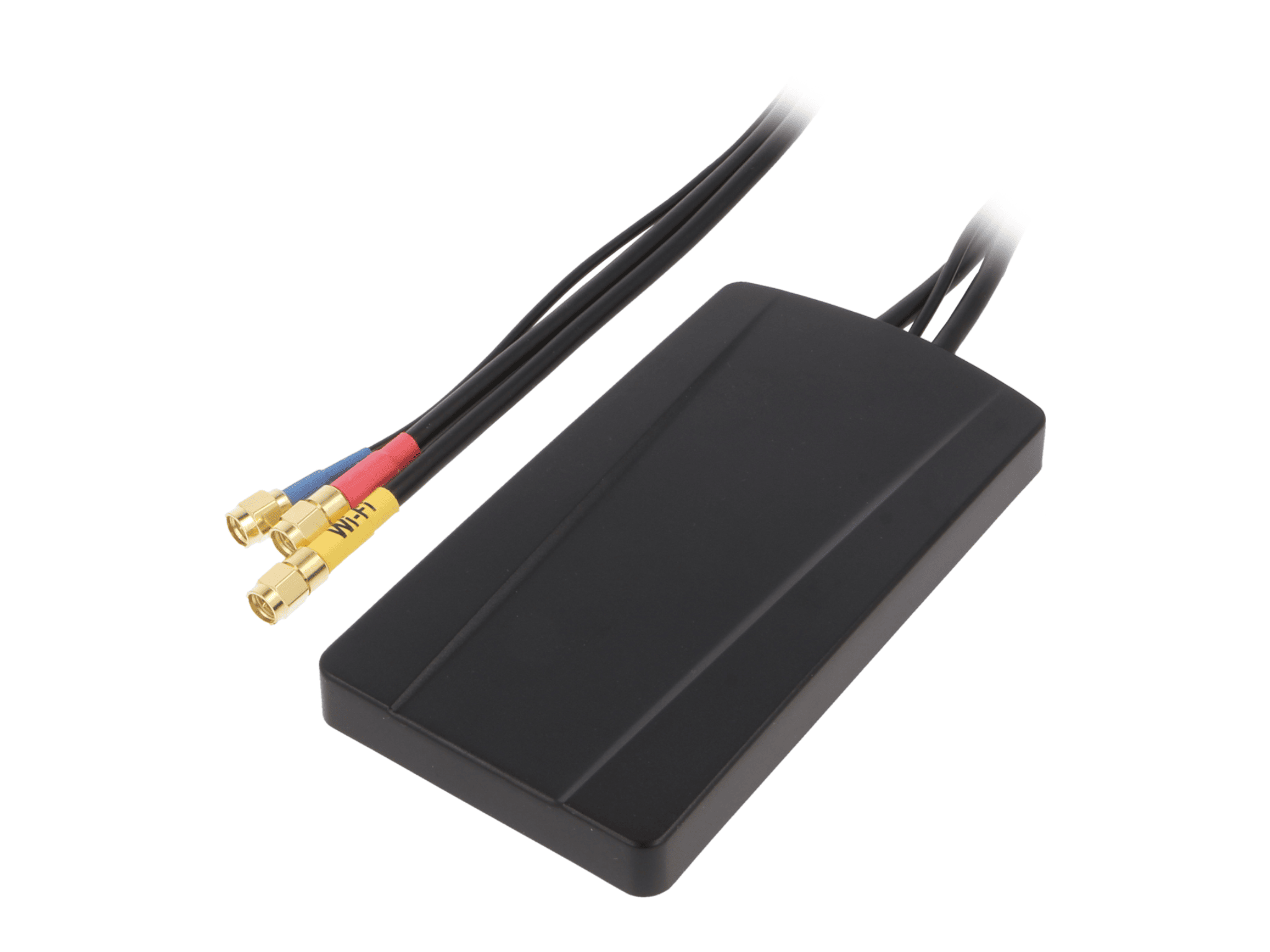 Antenna kit provides comprehensive support for wireless communication.