Okpac® solid-state relays by Celduc
Okpac® solid-state relays by CelducDate of publication: 08-08-2022 🕒 6 min read

Solid-state relays are becoming increasingly popular. In addition to electromagnetic radiation resistance and noiseless operation, their advantages include excellent current performance and ultra-fast switching times. A number of suppliers known for producing high-quality electromagnetic components are now manufacturing products made using the SSR technology. An example of such a brand, one of the world leaders in its field, is French company Celduc. Below, you will find an overview of this supplier's extensive range of solid-state relays. These products are known collectively as okpac® – however, the parameters of each series have been developed to meet the specific needs of a wide variety of applications.
Okpac® SSRs
Okpac® relays are SSRs (Solid State Relays) designed for panel-mounting. They are enclosed in housings (to prevent accidental contact) compliant with the 45mm standard. Key features of the products include their exceptionally long service life, thanks to the use of Celduc's proprietary TMS2 technology; integrated and removable contact covers; compatibility with a wide range of currents and voltages (up to 690V AC and 125A, depending on the model).
SO4 series
The SO4 series components are a good choice for proportional control of resistive loads. The control current of these relays is 4...20mA at voltages ranging from 0...5V to 8...30V DC (depending on the model). They are available in versions with screw terminals and potentiometer sockets. The products meet the requirements of EN60947 and EN60950 standards for the insulation of control components and can operate with AC currents of 40Hz to 70Hz.
SO7 series
The components in this series include fast-acting relays designed for high inductive loads (primarily transformers). Their leads are protected to ensure high resistance to electrostatic discharge (in compliance with IEC/EN61000). Like many other models presented here, they can be controlled using a wide range of voltages, as low as 3V DC, and – like most models here – feature a front-mounted LED indicating the relay status.
SO8 series
The SO8 relays are designed for a wide range of loads, both inductive and resistive. They are activated when the power phase crosses zero (relative to the neutral potential). They are characterised by resistance to voltage peaks and high inrush currents, and their inputs and outputs are protected by varistors. These products handle currents up to 125A (using a heat sink) and voltages up to 690V AC. Depending on the model, they can be controlled with voltages ranging from 3V to 265V DC or 20...265V AC.
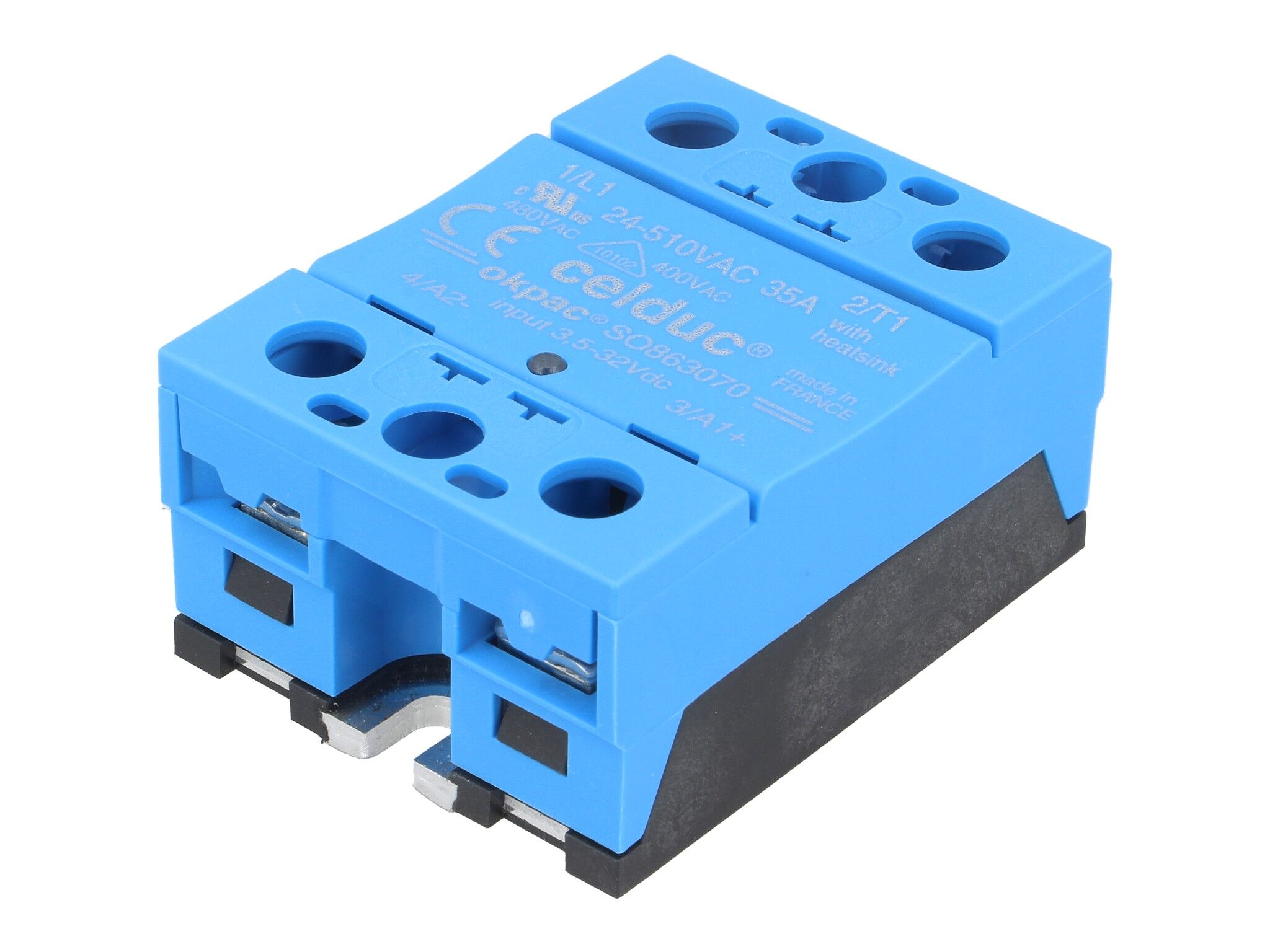
Removable terminal block covers improve dust resistance.
SO9 series
The SO9 series is mainly intended for controlling AC-51 resistive loads, i.e. non-inductive or low-inductive loads: these mainly include heating elements in e.g. industrial furnaces, which usually require high switching frequency. The relays feature a built-in overcurrent protection on the control line (opto-isolated), where they handle a wide range of voltages (from 3V to 32V DC). The products can operate at temperatures up to 100°C.
SOB series
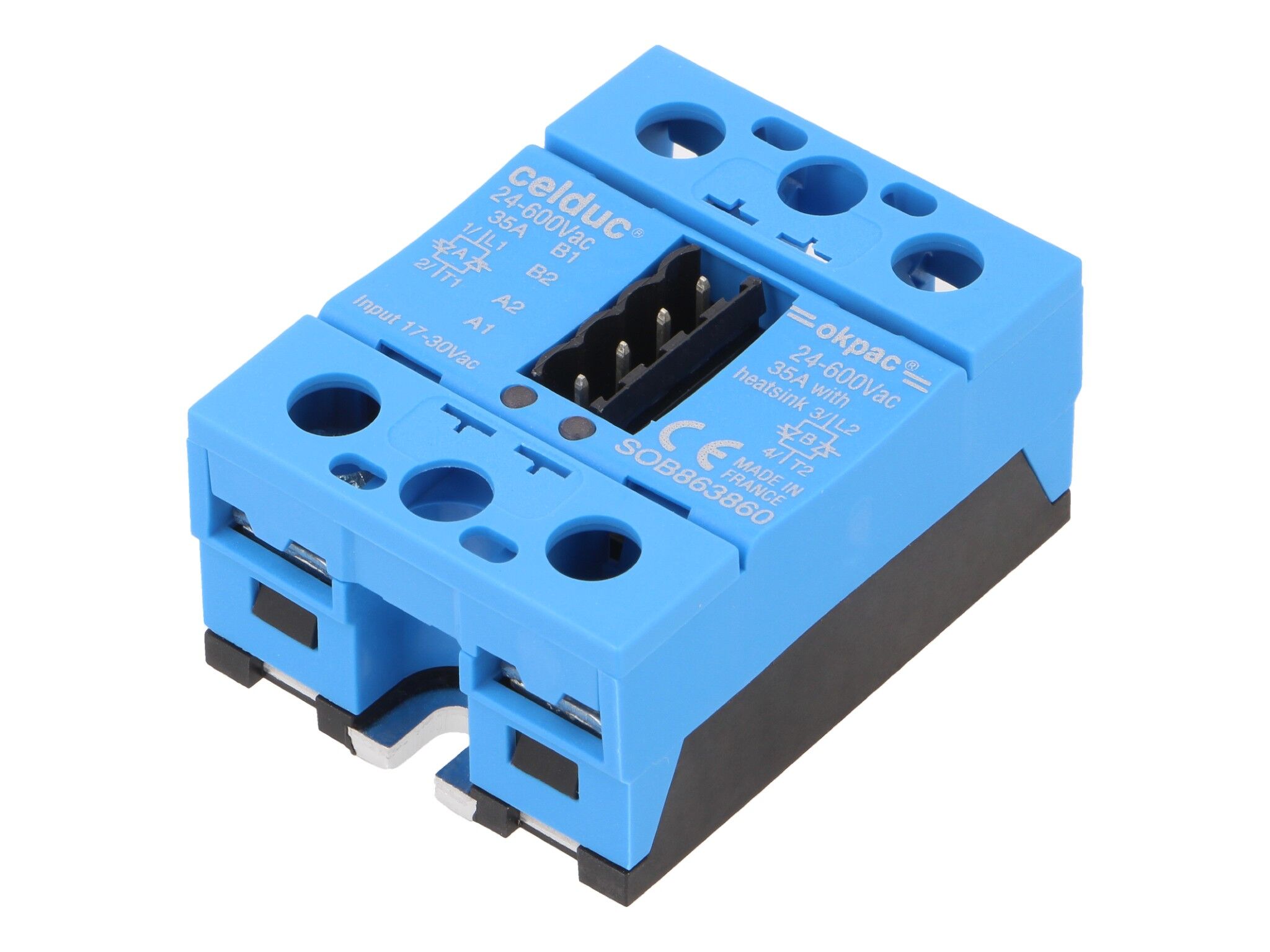
Centrally located control connector is used to control 2 independent channels.
The SOB series comprises products that are actually two independent SSR components enclosed in a housing similar to the other relays described here. This allows for space saving and faster installation, as well as enables operation as a two-phase relay. Among the SOB series are products with both zero cross and fast-acting switching characteristics. They handle voltages up to 600V AC and currents up to 75A. Controlled using connectors on the front of the housing, the relays are equipped with two indicator lights to signal the status of each relay.
SOD series
The SOD relays are general-purpose, zero-cross switching components featuring the typical parameters of the okpac® product family. They are distinguished by the presence of a diagnostic output and an additional LED indicating correct operation of the component. The absence of a signal confirming the operation of the relay may be caused by: failure of the SSR circuit itself (the circuit has not been closed despite the presence of the control signal or remains closed after the signal has disappeared), absence of input voltage or its drop below the nominal 50V AC (power supply failure), short-circuit at the input or output of the relay. This feature allows for quick diagnosis of system faults. The signalling output is operated by an opto-isolated transistor, so that it can be used for remote fault notification.
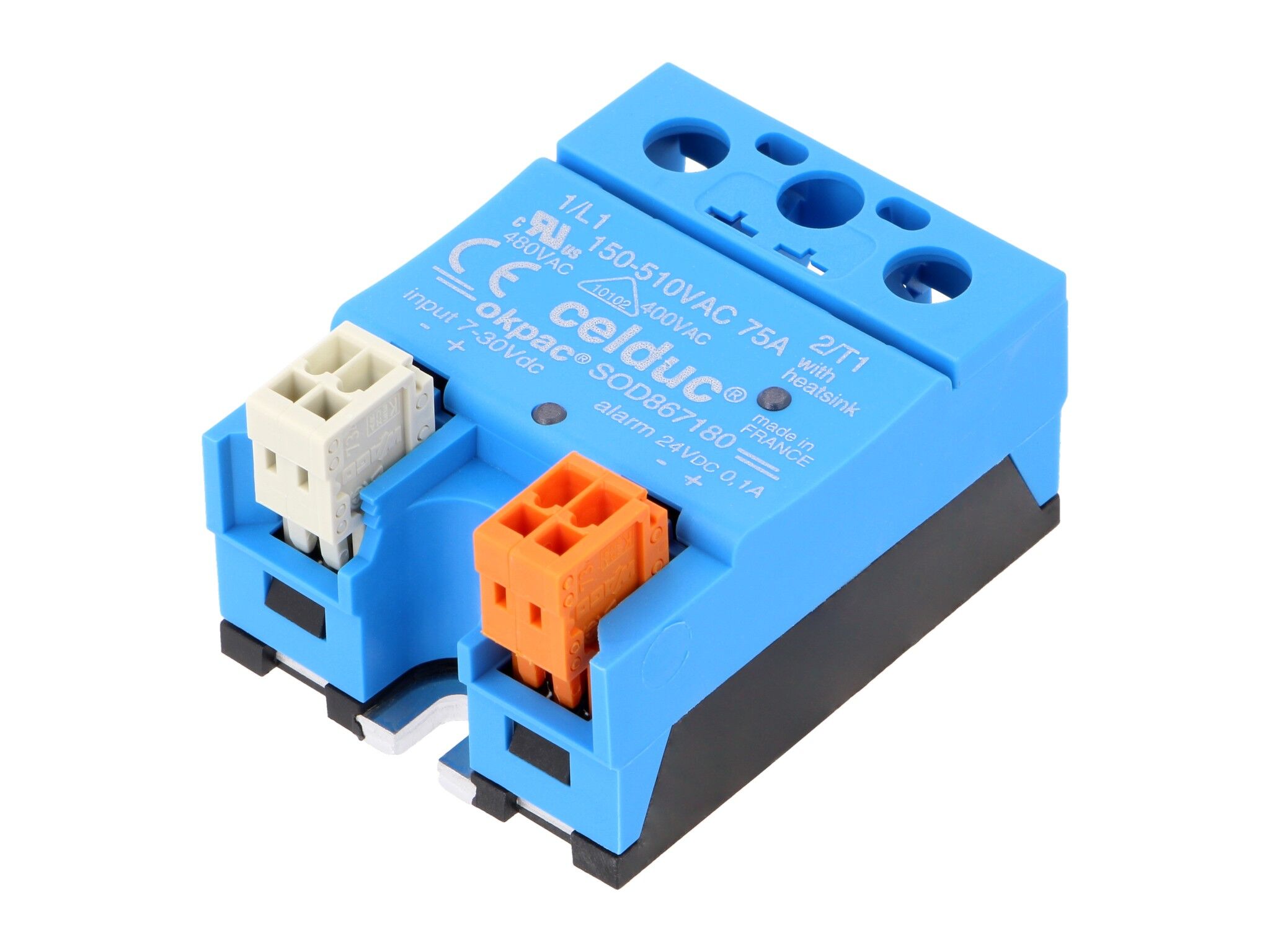
The indicator and signalling output in the SOD series are used to improve servicing.
SOM series
A characteristic feature of the SOM series is support for direct current (DC) loads. Based on MOSFET components, the relays can switch voltages in the 5...40V, 5...60V or 5...110V DC ranges, at currents of up to 60A (20A without the use of an additional heatsink). The strengths of this product group include: low leakage current, ultra-low resistance in the conducting state and the control line protected against interference and reverse polarity voltages.
Other series of the okpac® product family
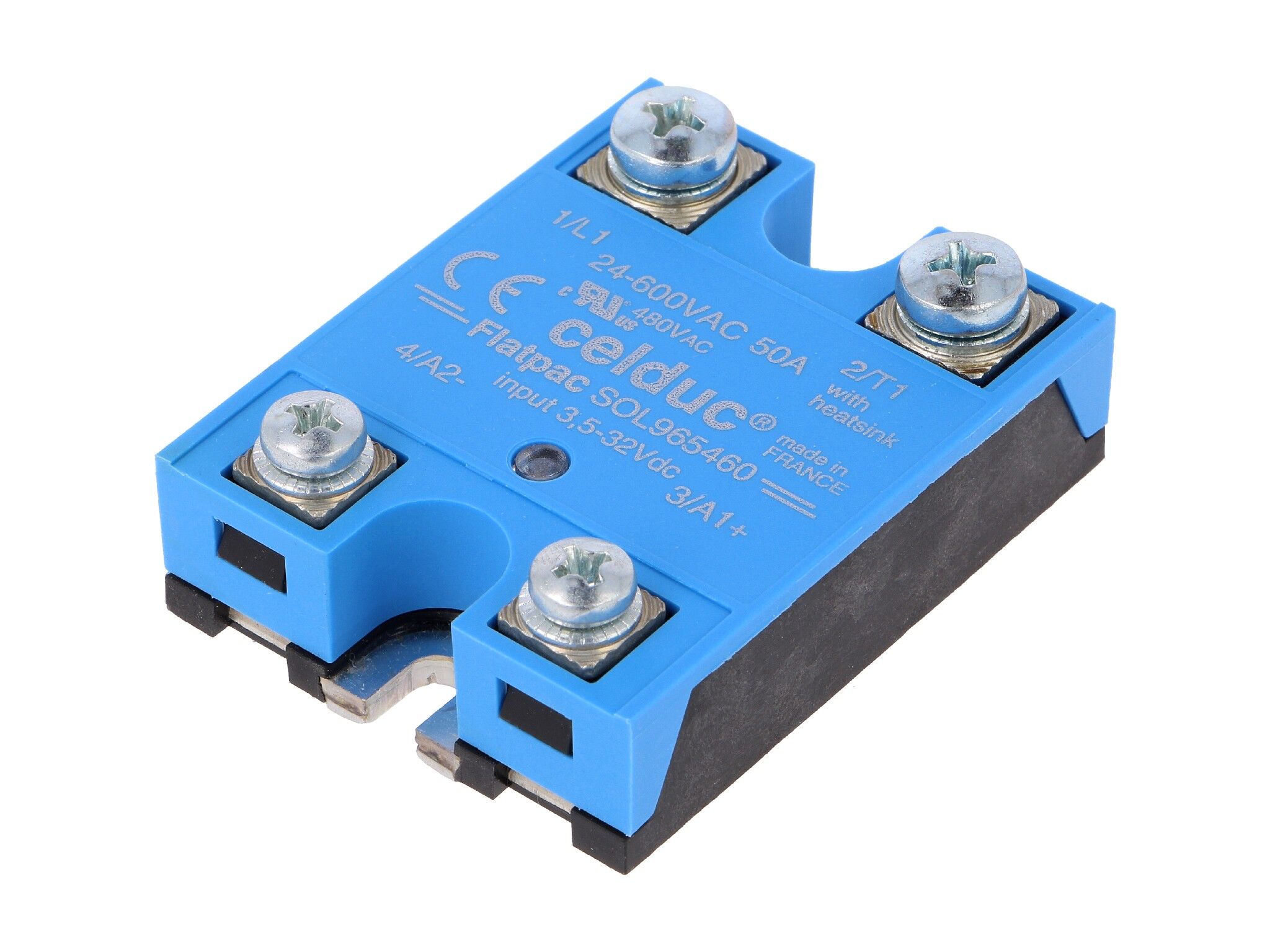
The low-profile body of the SOL series facilitates the development of compact systems.
The TME catalogue also includes other products of the okpac® family. These are, i.a., components of the SOL series distinguished by their low-profile design with current performance that is not inferior to the brand's most robust series. Other unique design features include spring clamps applied in the SOR series components. Due to the nature of their operation, two more series should be mentioned here: SOP and SON. The former was developed to power the primary winding of transformers (activation at the peak phase voltage). The LED indicator in these products can signal not only the status of the relay, but also its failure or lack of input voltage. The advantage of the SON series, on the other hand, is very low interference emission, compliant with the EN50081 standard relating to electromagnetic interference in residential installations. Thanks to that, these products can be used, for example, in lighting drivers for housing estates, corridors, as well as household automation and household appliances.