Raystar Optronics OLED Displays
Raystar Optronics OLED DisplaysDate of publication: 03-08-2026 🕒 5 min read
The display is one of the basic elements of interfaces through which humans can communicate with machines. They are responsible for presenting the most important information about the device's status, current settings, or messages related to their operation. In many industrial and technical applications, however, it is not enough for the screen to simply work. Its readability, reliability, low power consumption, and the ease with which it can be integrated with existing systems are important.
The Advantage of OLED over LCD
For years, the dominant technology was the classic LCD displays. They are well known to electronics designers and users alike. However, with the development of measuring devices, automation, control systems, and mobile equipment, OLED solutions have increasingly been adopted. This technology has several features that are particularly important from the customer's and designer's point of view. Most importantly, OLED display pixels emit light independently, so these modules do not require additional backlighting. This also translates to high contrast and very good readability. In practice, this means that OLED displays perform well wherever information needs to be visible "immediately". A quick glance is enough to know what the electronic device wants to convey. This applies, among others, to operator panels, measuring equipment, medical devices, and building automation systems.
One of the manufacturers of OLED displays available at TME is Raystar Optronics. This company specializes in producing display modules for industrial and consumer devices. Its portfolio includes simple alphanumeric displays, but also more complex graphic modules, including versions equipped with a touch panel.
Raystar Optronics Portfolio
Raystar's offering includes both alphanumeric and graphic displays. The former are a good choice wherever mainly text, numerical values, or simple messages need to be displayed. They can successfully replace classic character LCD modules, maintaining a similar logic of presenting information, but also offering the advantages of OLED technology. Importantly, alphanumeric constructions support many character sets and languages, including English, Japanese, and Cyrillic. This is significant for devices intended for different markets or used in an international environment.
Graphic modules offer greater freedom in presenting information. Instead of being limited to characters in a specific row and column layout, designers can display symbols, pictograms, charts, progress bars, warning icons, or more elaborate images designed for specific applications. This type of solution is suitable for more advanced devices: multifunctional measuring equipment, control panels, control systems, medical devices, and home and industrial automation.
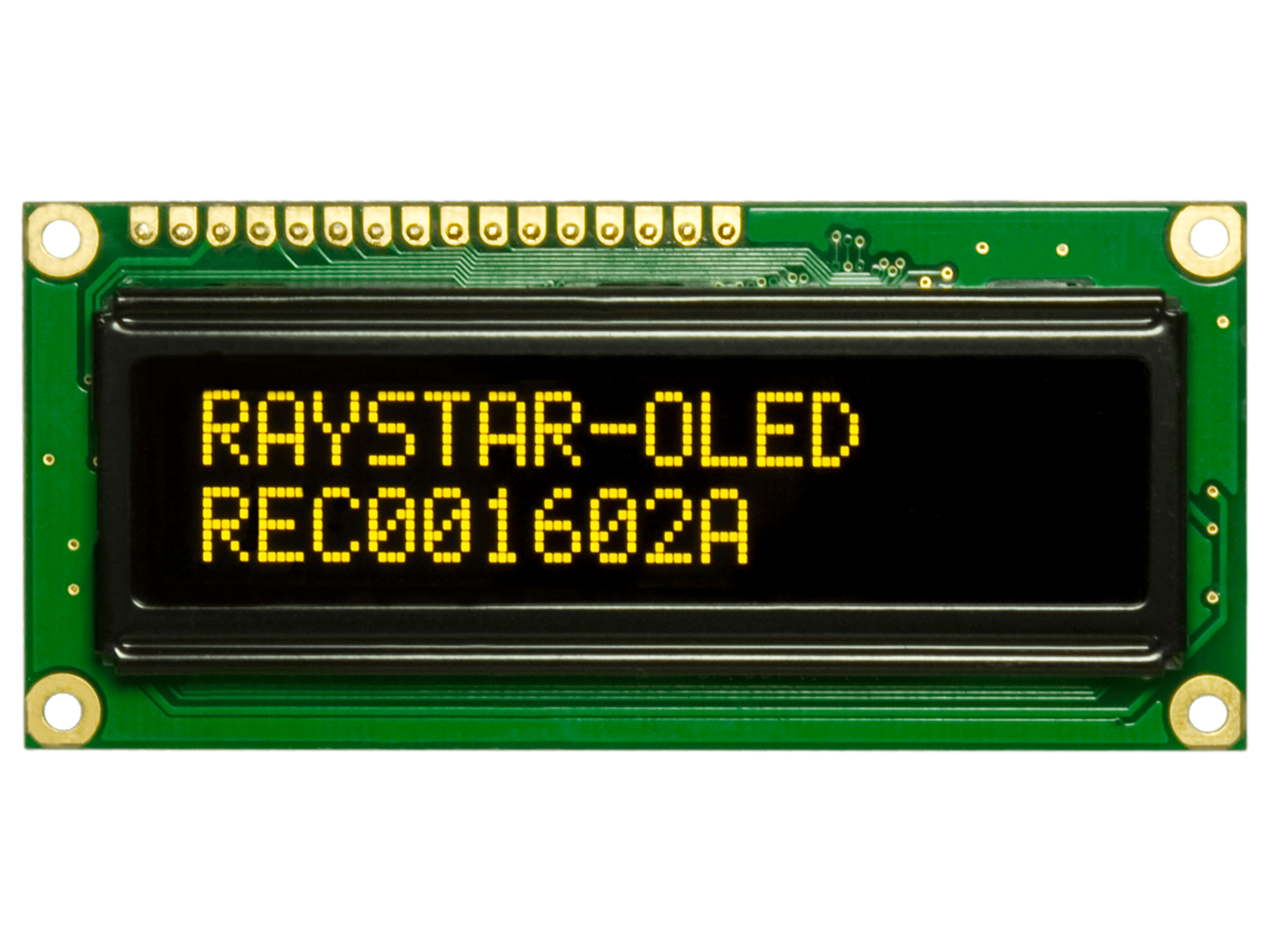
Display available in yellow, white, red, blue, and green.
Raystar Optronics' OLED display offering includes many design variants, allowing the module to be selected not only in terms of size or resolution but also mounting method and integration with electronics. Available versions include COG, COF, COG+FPC, and COG+FPC+PCB. Such diversity is particularly useful when the device is designed for a specific enclosure, front panel, or pre-imposed mounting requirements. Different needs will have the manufacturer of a handheld, mobile meter, different a controller designer mounted in a control cabinet, and yet another a designer of an operator panel for an industrial machine.
Benefits of OLED Technology from Raystar Optronics
One of the most important advantages of OLED displays is very good readability. High contrast makes the displayed information clear, and the lack of classic backlighting allows for deep black. This is especially important in equipment operating in variable lighting conditions, such as in production halls, mobile laboratories, or vehicles. It is also worth mentioning the viewing angles. A machine operator or maintenance technician does not always look at the screen directly from the front. In the case of panels mounted at an angle, handheld devices, or modules placed in a larger system, good visibility significantly improves comfort and safety at work.
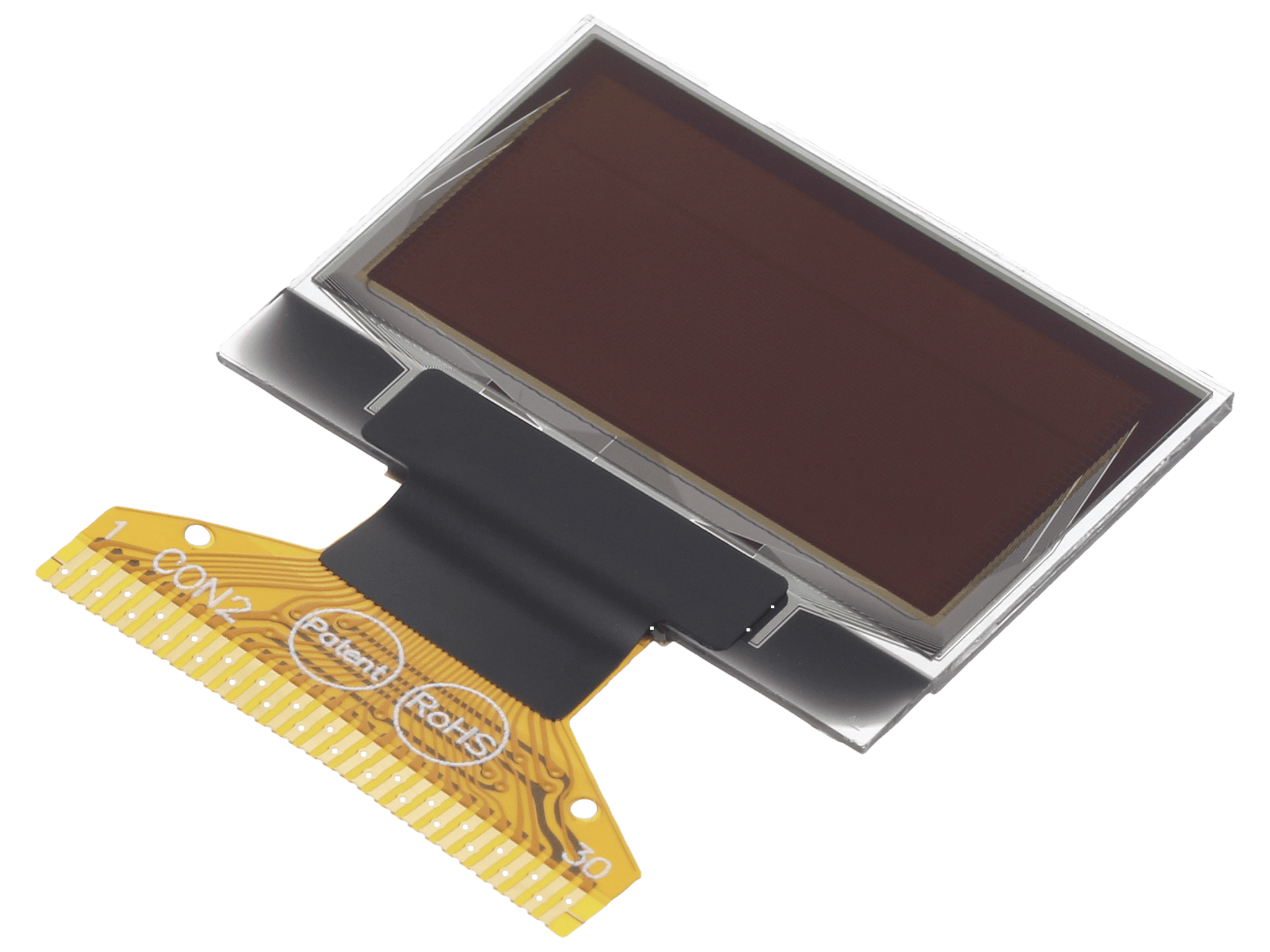
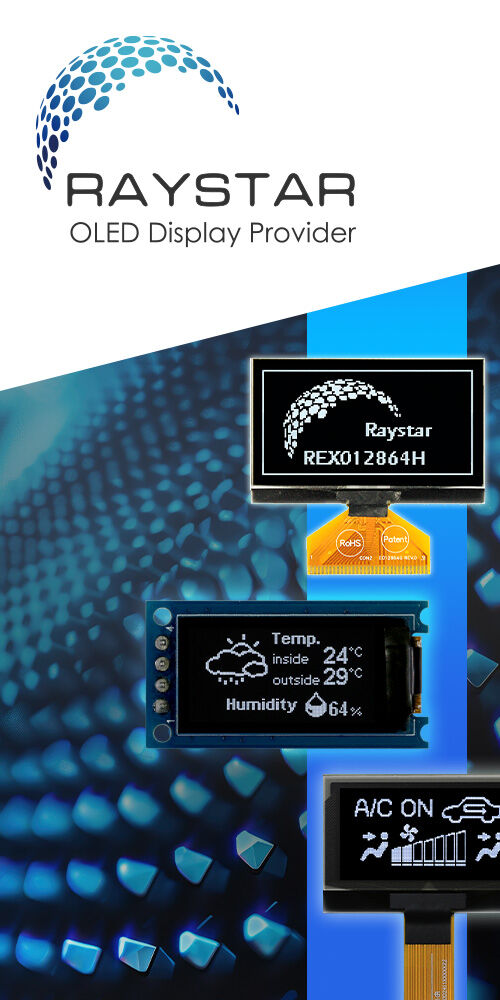
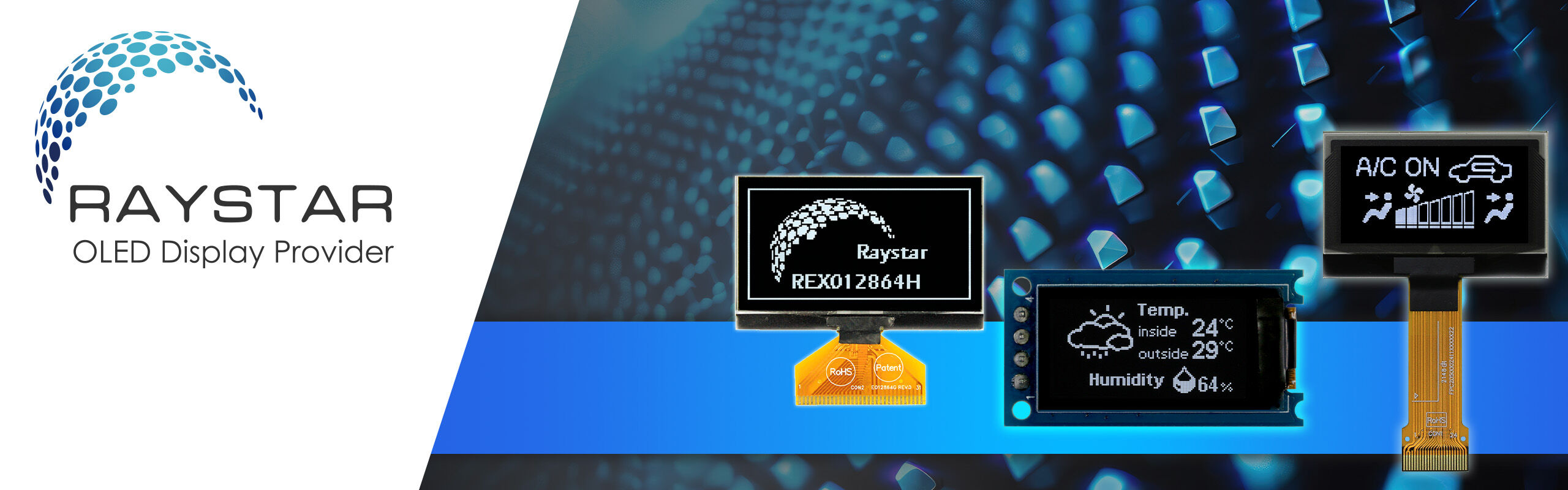
Graphic display with a resolution of 128x64.
Raystar displays support popular communication interfaces, such as 6800, 8080, I2C, and SPI. Parallel data transmission methods like 6800 and 8080 can be used wherever compatibility with previous solutions is required. Meanwhile, I2C and SPI are extremely popular in modern microprocessor systems because they reduce the number of signal lines and simplify the PCB design.
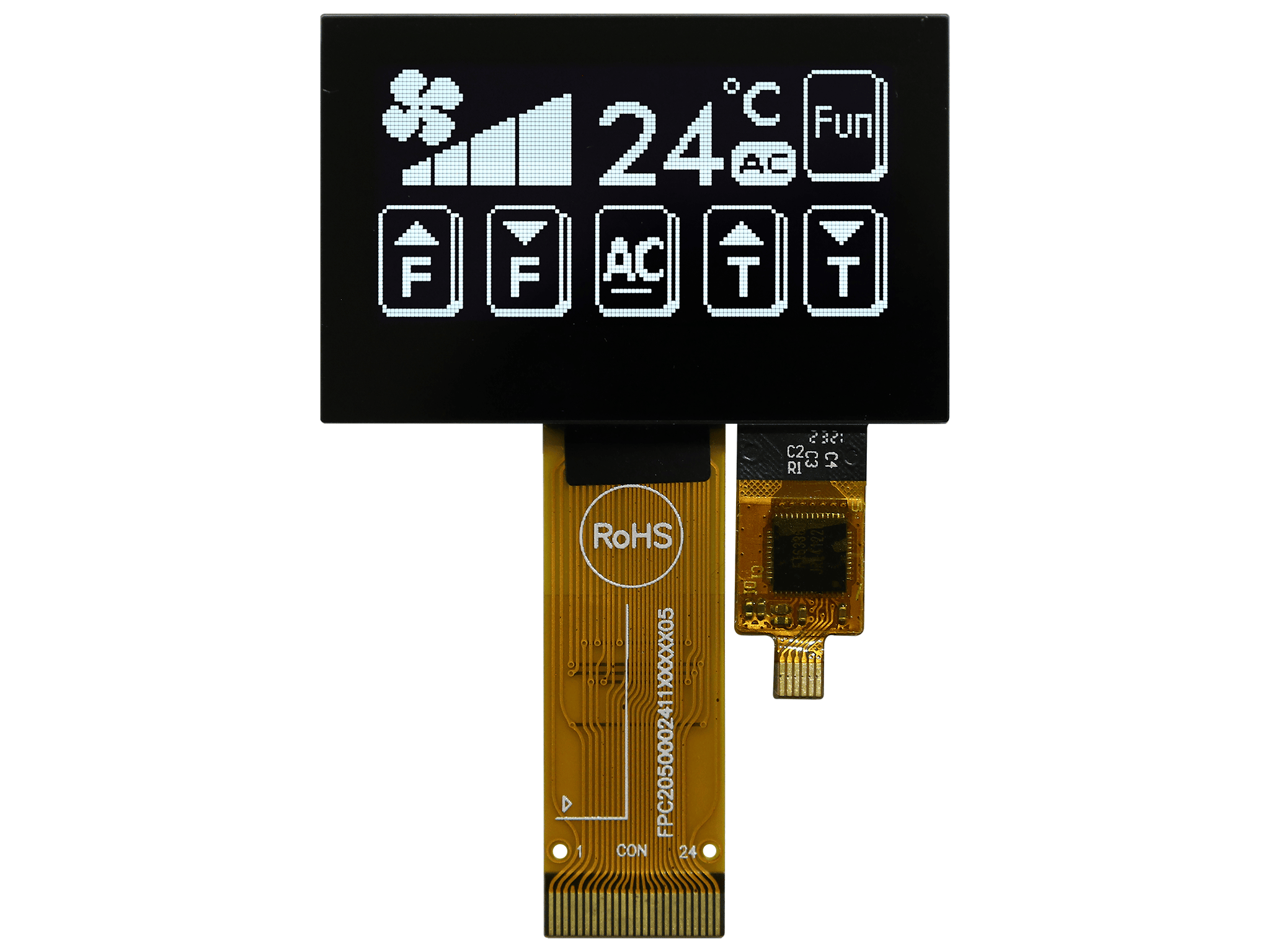
Display with a touch panel.
Low power consumption is another important feature in modern applications. In battery-powered devices, portable meters, wireless measurement modules, or IoT systems, every additional milliamp affects the device's operating time. OLED displays, thanks to light emission directly from the pixels and the absence of external backlighting, are extremely useful in such equipment.
OLED modules in the TME catalog are available in various colors, including white, yellow, green, blue, and red. They differ in dimensions, resolution, character layout, supply voltage, and lead arrangement. When designing the target device, it is important to select the display appropriately to avoid later time-consuming modifications.
It happens that the display is not only an informational element but also part of a complete user interface. Therefore, it is worth mentioning that Raystar offers versions of OLED screens equipped with a capacitive touch panel. Such modules can be particularly useful in compact devices where limited space on the front panel makes it difficult to use classic, mechanical buttons. This makes the design simpler and reduces the number of components susceptible to wear. Depending on the software prepared, the same screen can handle different menus, operating modes, service messages, or default views tailored to a specific user. This is especially important in modern industrial equipment, which increasingly needs to combine ease of use with advanced functionality.