Parallel connection - definition
Parallel connection - definition
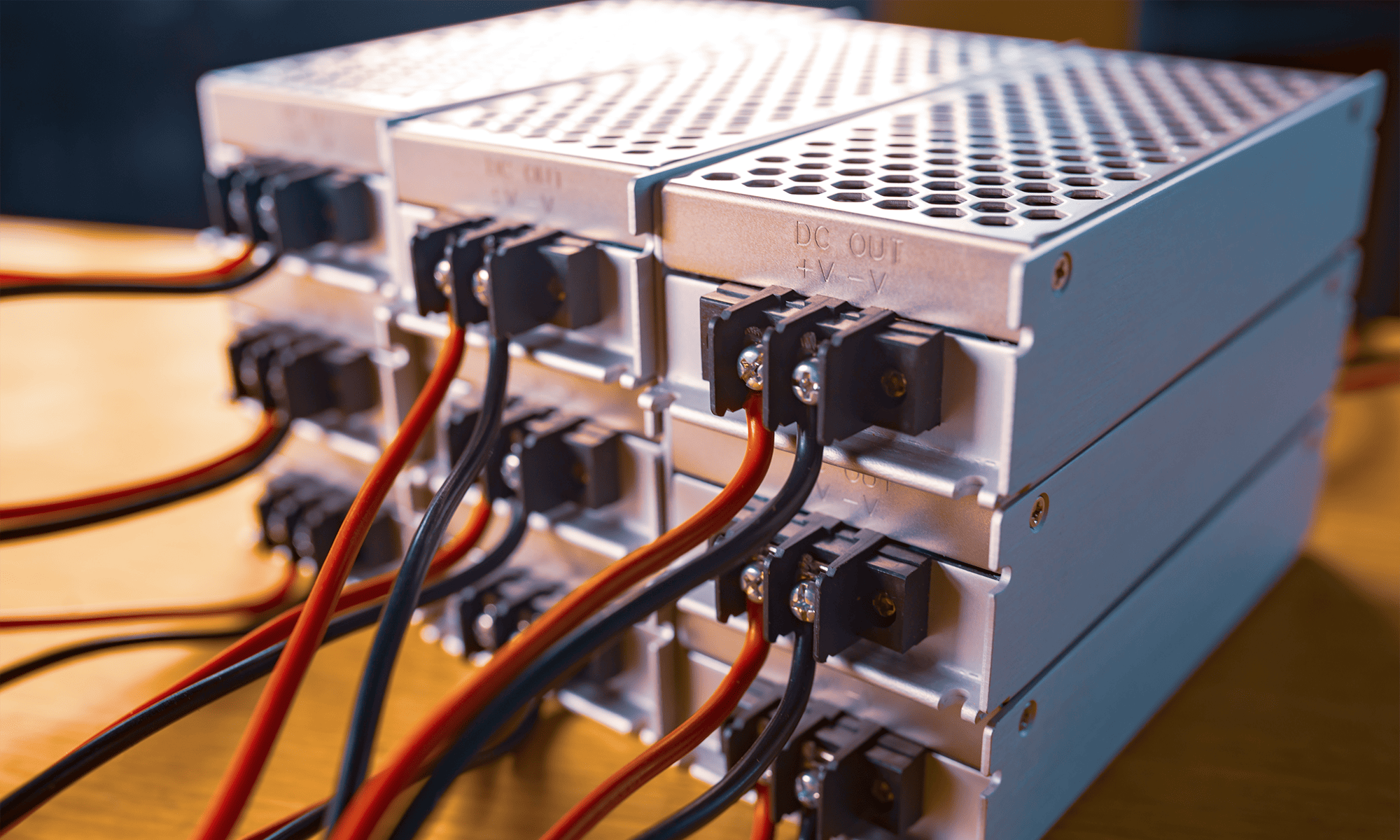
Parallel connection is a configuration of an electrical or electronic circuit in which all the elements of a circuit are connected between two common points, and the voltage applied to each of them is identical. In this topology, the electrical current is distributed between the individual branches according to their impedance or resistance, and the total current in the circuit is the sum of the currents flowing through each branch.
For resistors connected in parallel, the equivalent conductance of the circuit is the sum of the conductances of the individual resistors, leading to a reduction in equivalent resistance relative to the smallest resistance value in the circuit. For reactance elements such as Capacitors, e.g., the behaviour of the circuit depends on their permittivity, which affects the total impedance of the circuit and its frequency characteristics.
Parallel topology is used in power distribution systems, where it provides redundancy and independence of power supply to individual consumers, and in electronic filters, where it enables selective suppression or amplification of specific signal bands. In systems composed of electrochemical cells a parallel connection increases the total energy capacity of the system while maintaining the nominal voltage of the individual cell, which finds application in energy storage systems and emergency power supply.
Dynamic analysis of parallel systems requires consideration of phenomena related to non-uniform current distribution, magnetic coupling and parasitic effects, which can lead to uncontrolled impedance changes as a function of frequency. Reactance compensation techniques and active control systems are used in multi-branch systems to stabilise voltage and improve energy efficiency.
In parallel system design, it is important to ensure uniform operating conditions for all branches, which requires precise control of electrical parameters and minimisation of conduction asymmetry, especially in high-current applications where uneven current distribution can lead to component overheating and degradation of operating characteristics.
Transfer Multisort Elektronik (TME) is one of the world’s largest global distributors of electronic components, electrotechnical parts, workshop equipment, and industrial automation. The catalog includes over 1,500,000 products from 1,300 leading manufacturers. TME’s modern logistics centers in Łódź and Rzgów (Poland), with a combined area of over 40,000 m², ship nearly 6,000 packages daily to customers in more than 150 countries.
TME also invests in the development of knowledge and skills of young engineers and electronics enthusiasts through the TME Education project, and supports the tech community by organizing the TechMasterEvent series, promoting innovation and experience exchange.