IQRF-DALI Bridge
IQRF-DALI BridgeDate of publication: 02-04-2021 🕒 6 min read

- DALI Digital Lighting Interface
- DALI standard vs. 1-10V system
- IQRF technology for safe and reliable communication
- IQRF-DALI Bridge – wireless solutions for building automation
- Additional benefits from using IQRF-DALI bridge
Proper lighting is one of the factors that influence safety and comfort in the home, office and industrial spaces. Unfortunately, year by year, the price of electric energy increases, so all its users try to reduce costs and use the energy more effectively. One of the solutions is to replace inefficient sources of light (e.g. or halogen) with energy-efficient LED lamps. Other possibility is to invest in lighting control systems and integrate them with BMS (Building Management Systems) which enhance the level of automation and generate savings. Microrisc s.r.o, in cooperation with IQRF Tech s.r.o offers a product which brings added value to the process of creating effective wireless lighting control systems operating on the basis of the DALI standard. With an IQRF -DALI bridge you can achieve even greater savings with less work.

Figure 1. IQRF-DALI bridge. Bridge between the DALI and IQRF technologies
DALI Digital Lighting Interface
DALI (Digital Addressable Lighting Interface) is a protocol that enables communication between the luminaires and the central unit. The DALI standard was established in the late 1990s, as a digital successor to the 1-10V analogue system. It is a result of cooperation with top brands such as Philips, Helvar, Osram or Tridonic. The system has an open architecture, which means that adding new devices, like sensors, luminaires, lighting panels is not a problem. DALI central unit can control up to 64 devices within one line. Each of these devices can be assigned to 16 separate groups and 16 separate scenes. In addition to the basic commands such as on/off, dimming/brightening, it is also possible to obtain status information from the electrical ballast.
DALI standard vs.1-10V system
Compared to 1-10V system control, DALI standard features:
- higher resistance to interference and lower failure rate due to the operation on a digital signal;
- high flexibility of system expansion owing to the open infrastructure of the system;
- two-way data flow (the central unit sends control signals, but also collects information from luminaires and sensors);
- the possibility of integration with the building management system (BMS);
- the possibility of stationary access, without the need to fit a large number of switches;
- remote access and configuration via computer, tablet or mobile app;
- higher data transfer speed and relative simplicity of implementation.

Figure 2. Example TR 72DC and TR 72DAT modules available from Transfer Multisort Elektronik.
In DALI standard, communication between the luminaire and the central unit is wired (except for the IEC 62386-104 variety in DALI2 standard), which makes things difficult in the case of infrastructure expansion or implementation of new infrastructure in historic buildings. The necessity to use control wires makes it impossible to use the functionality of the DALI system also in the case of the smart street lighting application, too.
IQRF technology for safe and reliable communication
IQRF® is a wireless communication technology in Sub-GHz (433 / 868 / 916 MHz) radio band. It enables transmission of a small amount of data with minimal power consumption. Depending on the selected option, the power consumption is between 10 and 20mA in the standard mode or around 250uA in the low power mode. IQRF modules can operate in a POINT – POINT, STAR, PEER – PEER as well as MESH topologies. As many as 240 devices can operate in the MESH structure within a single network, ensuring secure and reliable operation, while maintaining high comfort of network operation.
The main features of unique IQRF technologies include:
- reliability of data transmission thanks to the use of the IQMESH protocol,
- integrated Fast Response Command (FRC) protocol, which allows to collect data much faster and more efficiently than in the case of classic device polling,
- three-level security of data transmission,
- integrated Direct Peripheral Access (DPA) protocol, allowing for faster work progress at the developer stage,
- IQRF IDE app for effortless network creation, its visualization and widely understood management.

Figure 4. IQRF-Ethernet gateway enables transfer of the collected data to the cloud.
The IQRF technology ensures interoperability with all existing communication standards, such as LoRa, Wi-Fi, GSM, Bluetooth or Ethernet, at the gateway level.

Figure 3. Possibilities of using the IQRF technology products.
More information on the use of IQRF solutions for wireless communication is available in the article „Proven wireless communication solutions by IQRF Tech” as well as on the manufacturer’s website.
IQRF-DALI Bridge – solutions for building automation
IQRF-DALI bridge is a small device (88 mm x 38 mm x 22 mm) thanks to which DALI commands can be sent via IQRF wireless network directly to the luminaires. As a result, wires used to supply control commands between the controller and the luminaire are not necessary. It also allows to use the advantages of the DALI system in street lighting control. One more important aspect is worth emphasizing. On the topology side, the DALI standard is a linear or tree standard. This means that in the event of a cable breakage, connection to a large number of luminaires can be lost.
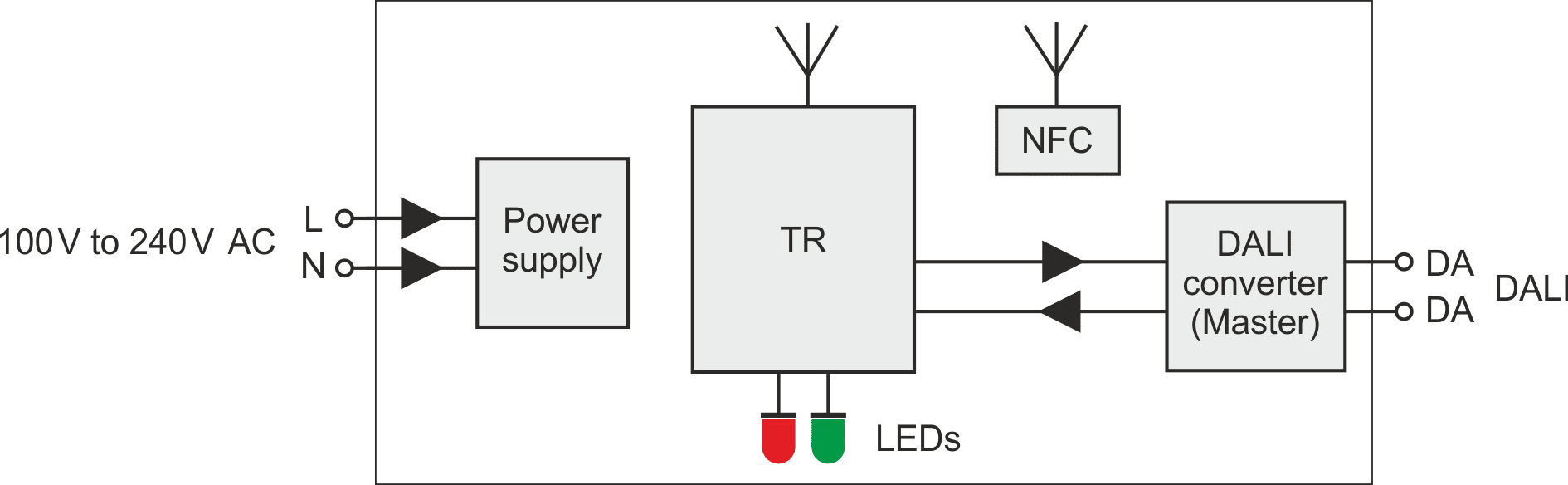
Figure 5. Block diagram of the IQRF-DALI bridge. Full documentation is available at www.iqrf.org and in the product tab in the TME catalogue.
The IQRF technology works wirelessly in the MESH topology, which is more reliable than the linear structure, due to the existence of the alternative connections between devices. Its reliability is additionally supported by redundant sending of data packets, which results directly from the specific character of the IQMESH protocol. The range of several dozen meters between the devices has been confirmed in practical applications. The manufacturer provides and shares sample control commands and presents the principle of operation on the example of an OSRAM controller. Built-in EEPROM memory with NFC support can be used to connect devices in a network with the use of portable devices such as a phone or tablet. The FRC protocol will ensure convenient and quick data collection from the existing network. The central unit in the DALI standard can connect up to 64 devices. IQRF technology can support up to 240 devices within the network. However, it is worth mentioning that working with smaller networks ensures their more efficient management.
Additional benefits of using an IQRF-DALI bridge
IQRF DALI bridge is dedicated for system integrators, manufacturers from the lighting industry and suppliers of lighting control systems. The use of the bridge introduces new possible ways of using the functionalities of the popular DALI system, both in the existing infrastructure and in new investments. Its implementation does not require the use of control wires, so the modernization of existing facilities can be carried out without oppressive noises related to construction works and without affecting the appearance of the building. It is also an opportunity to use modern technologies in historic buildings. The use of IQRF-DALI bridge shortens the investment process as well. The time saved automatically translates into lower costs incurred by the investor. The noticeable increase in the prices of construction works and materials, as well as the forecast of further price increases in these areas, mean that in the near future the interest in wireless control systems will increase even more.
I encourage you to learn more about the technical specification of IQRF-DALI bridge, as well as with the products of IQRF Tech s.r.o available from Transfer Multisort Elektronik.
Author:
Piotr Antończyk
IQRF Tech s.r.o
Transfer Multisort Elektronik (TME) is one of the world’s largest global distributors of electronic components, electrotechnical parts, workshop equipment, and industrial automation. The catalog includes over 1,500,000 products from 1,300 leading manufacturers. TME’s modern logistics centers in Łódź and Rzgów (Poland), with a combined area of over 40,000 m², ship nearly 6,000 packages daily to customers in more than 150 countries.
TME also invests in the development of knowledge and skills of young engineers and electronics enthusiasts through the TME Education project, and supports the tech community by organizing the TechMasterEvent series, promoting innovation and experience exchange.