5G connectivity – ever-increasing possibilities
5G connectivity – ever-increasing possibilitiesDate of publication: 14-08-2024 Update date: 10-04-2026 🕒 7 min read
Initially, efforts aimed at implementing the 5G network were met with a dose of resistance and doubt from the society. However, with time, more and more users have started taking advantage of this new technology. It supports rapid mobile data transmissions and connections spanning a huge number of various devices, including environmental sensors or units detecting specific events or objects. This, in turn, facilitates forecasting, monitoring, remote control, and other operations that were previously inaccessible or even impossible due to the technological limitations of wireless networks.
- 5G network – basic facts
- Mobile broadband network
- eMBB network
- mMTC solutions
- URLLC service
- Future of 5G network
Initially, the implementation of the 5G transmission technology was based on the formerly used 4G LTE technology, and it involved deploying software updates in base stations. However, this solution made it rather hard to make use of the full potential of 5G, and its main effect was marketing and advertising the new network. That being said, it must also be admitted that it did offer some advantages over LTE. Firstly, the transmission speed was increased, and secondly, the network capacity was enhanced without any physical infrastructure expansion. Instead, now that the “old” infrastructure has been in place for some time, higher carrier frequencies (“C” band) are used to allow transmission speeds reaching several gigabits per second.
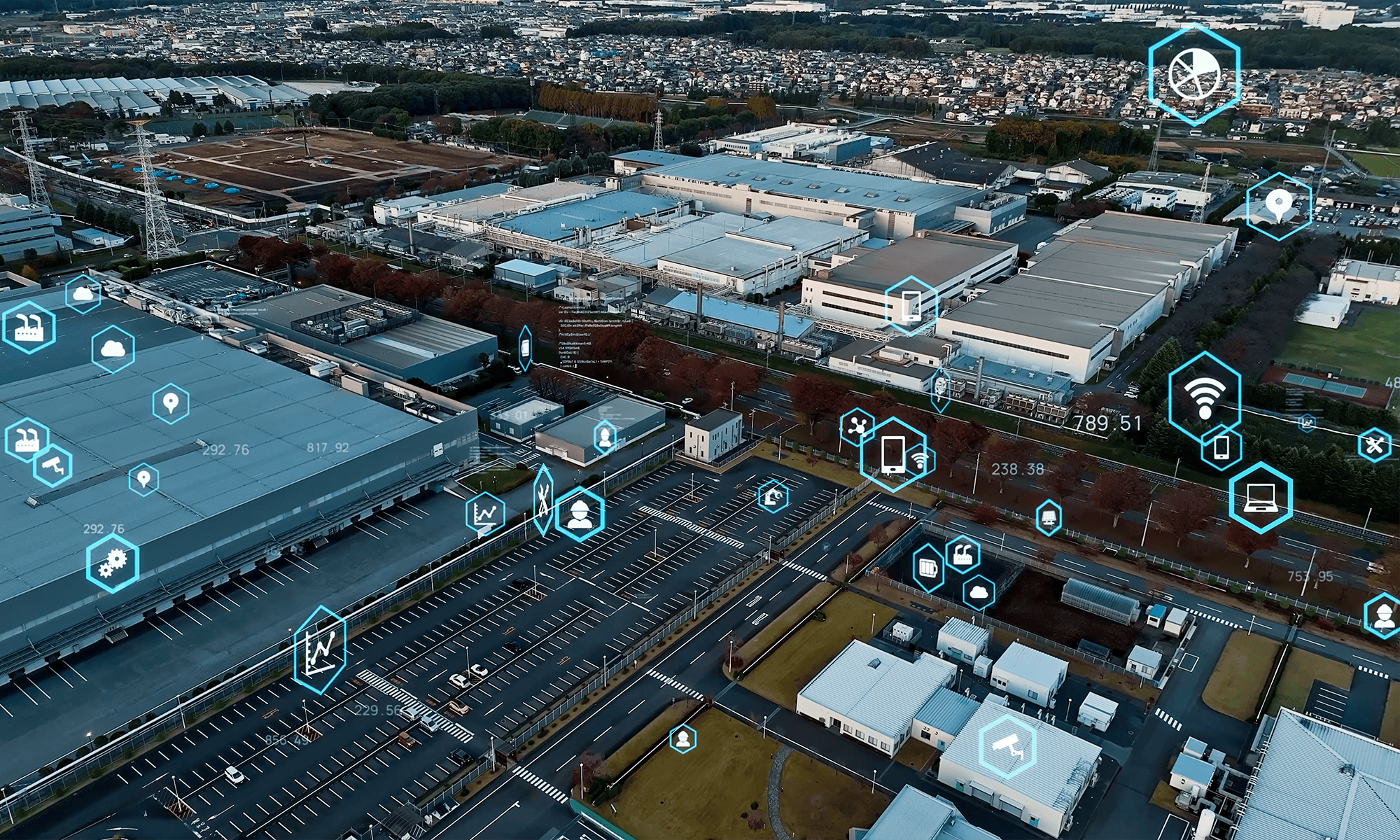
The 5G network is capable of operating even 1 million devices within a 1 km2 area. This capability has an enormous impact on the development of IoT, Smart City, modern agriculture, Industry 4.0, and other applications, such as illumination and water supply management systems, road traffic intensity analysis software, programs running car parks or supervising autonomous vehicle operation. Moreover, thanks to the impressive network capacity, devices not only transmit data to the system that supervises their operation or creates forecasts, but also communicate with one another. Even today, solutions implemented in some autonomous vehicles make it possible to share data on accidents, traffic jams and detours. There are also solutions that are able to control traffic lights depending on actual traffic, thus eliminating congestion.
5G technology – basic overview
The main spectrum of radio frequencies operated in 5G networks ranges from 3.3 to 4.9 GHz. Lower frequency bands (<1 GHz) are reserved for devices providing larger area coverage and designed to penetrate rooms. Millimetre waves (frequency range: from 24 to 28 GHz and 39 GHz) are used in local hot-spots and applications providing outdoor and indoor connectivity. The 5G network radio frequency interface has been developed in a manner ensuring maximum flexibility, as it makes it possible to combine waves from various frequency ranges.
Other important features of the new interface include the MIMO technology and antenna array deployment. The antennas (also referred to as Massive MIMO) are installed in base stations to facilitate not only the correct forming of the frequency characteristics, but also of the radiation characteristics, to ensure the area coverage and direct radio frequency beams away from the user’s head (in mobile devices). As such, the MIMO antennas made it possible for the LTE and 5G technologies to “coexist” within the same area during the initial stages of the implementation process.
The 5G radio network includes the ORAN (Open Radio Access Network) interface operating between the RF path and cloud edge devices. It facilitates flexible service deployment and provides access to cloud resources and services. The processing operations required for correct radio frequency path functioning are performed by cloud edge devices, ensuring that the network capacity is quickly adapted to actual requirements.
The LTE networks support the following modulation schemes: QPSK, 16QAM, 64QAM and 256QAM. All the above-mentioned modulation types are also used by the 5G network radio frequency interface. Moreover, the 3GPP specification also includes the n/2-BPSK scheme to facilitate further reduction of the peak-to-medium power ratio at low transmission speeds, which is important in the context of selected services.
This feature is particularly useful while collecting data obtained from IoT sensors. The power ratio reduction in wireless paths provides energy savings to ensure longer operation of battery-operated equipment. A lower peak power rating may enhance network performance and mitigate the risk of interferences, which translates into higher connection quality and reliability. This is particularly important in areas characterised by high density of devices. Additionally, the peak power reduction ensures more efficient use of the available frequency resources (decreased harmonic levels), which in turn translates into higher network capacity, i.e. the ability to simultaneously operate a larger number of connected devices.
The spectrum of the new 5G network applications is even more extensive, so the list of modulation schemes is likely to be extended as well. For example, the 1024QAM modulation scheme may become part of the radio frequency interface specification, as the fixed connection designed to transmit data from the main network to sub-networks already uses a higher modulation scheme than 256QAM. The radio frequency interface specifications may also include modulation schemes dependent on the terminal equipment.
For the operation of diverse services within a broad frequency range, the scalable OFDM technology is required. It involves multiplexing in the frequency domain, i.e. a simultaneous transmission of multiple data streams using orthogonal carrier frequencies. Wider carrier spacing may be available for small-area, high-carrier-frequency services, where latency is a key factor. If individual carrier frequencies are lower, the spacing among them can be decreased, which is particularly useful for large-area services, narrow-band equipment and multimedia services, e.g. eMBMS. It may also be possible to simultaneously support multiple services with different requirements using the same carriers by multiplexing two different channel splits.
5G – main assumptions
The 5G network architecture has been designed with the view to operating the following three key service areas:
- Enhanced Mobile Broadband (eMBB) connectivity This service area extends and enhances the services currently used in mobile data transmission applications. It ensures the 10 Gb/s transmission rates for high-throughput applications, such as video streaming or VR/AR gaming.
- Massive Machine-Type Communications (mMTC) This service is designed to connect a massive number of devices. It is expected to be used mainly in applications related to Smart City solutions and other IoT applications.
- Ultra Reliable Low Latency Communications (URLLC) URLLC is a perfect solution for critical applications which require network reliability, minimum latency (below 1 ms), and short response times. Such applications include autonomous vehicles or remote control systems for industrial machinery.
Mobile broadband network (eMBB)
Initially, during the process of the 5G implementation, emphasis was put mainly on multiplying the data transmission speeds to enhance the mobile broadband application capabilities.
The 5G technology makes it possible to obtain very high transmission rates, due to the fact that broadband transmissions supported by the MIMO technology are implemented. The typical maximum bandwidth for the carrier frequency below 1 GHz is 20 MHz, which translates into 200 Mb/s TDD (Time Division Duplex ) speeds at 2×2 MIMO. The 100 MHz TDD band and 4×4 MIMO application provide transmission rates even up to 2 Gb/s. Also, 24–28 GHz frequency range millimetre waves make it possible to obtain 10–20 Gb/s at the 1 GHz bandwidth and 2×2 as well as 4×4 MIMO.
Thanks to the implementation of the 5G technology in existing LTE networks, much larger network capacities and higher data transmission speeds were obtained, mainly as a result of using antenna matrices and the MIMO technology. In real-life networks, an LTE cell with 20 MHz bandwidth ensures throughput amounting to 40 Mb/s, at medium-level traffic intensity. A 5G network cell with 100 MHz bandwidth makes it possible to connect 20 times more users, as a 5 times broader frequency band is used. So far, the 5G technology has ensured the highest capacity increase in the history of mobile telephony networks.
mMTC = millions of connected devices
Massive Machine-Type Communications (mMTC) is one of the three key 5G service areas. It facilitates transmission of massive numbers of small-sized data packages (e.g. sensor data) to/from a large number of devices. mMTC streamlines using applications collecting IoT sensor data to enhance the quality of users’ life or services they provide.
In terms of device density, mMTC supports up to 1 million devices per 1 km2, which is over 10 times more than in the case of the LTE technology. As such, 5G provides an infrastructure that is necessary to operate enormous sensor systems connected via the network of mobile telephony base stations.
The mMTC service area is designed to support mass IoT implementations handling a massive number of low-power-consumption devices for regular transmissions of small amounts of data. One of the main requirements for such devices is a long life while supplied by batteries, reaching even up to 10 years.
IoT sensors typically transmit small-sized data packages over the distance of up to 10 km. This makes them ideal for such applications as agriculture, where hundreds of sensors can transmit data on weather conditions, soil moisture levels, and the status of devices located across vast cultivated areas. Such data can, for example, be used to optimise the irrigation frequency and areas. In this kind of applications, sensors cannot use millimetre waves which have a very short range and are strongly attenuated by outdoor obstacles. To that end, the key feature of the 5G network is needed, thanks to which each of the three service areas may exist as an individual network operating within the same physical infrastructure. Network Slicing, also referred to as the Software Defined Network (SDN), is a system of distributing the throughput among different areas to correctly adapt various service functions. This means that each application can simultaneously access selected resources, but higher-priority applications are the first ones to do that.
Each Network Slice can be set up individually for safety, quality of service (QoS), and network sharing. For example, mMTC provides low-throughput, long-range and extensive-coverage connectivity, while URLLC (described below) ensures high reliability, but, in comparison with mMTC, does not ensure such a large area coverage.
The mMTC 5G connectivity enhances wireless network performance in a large spectrum of applications. Smart cities use a large number of sensors to monitor the consumption of utilities such as water, gas and electricity, and to streamline waste management. Within smart city systems, sensors can be strategically deployed throughout the city to collect data which is then sent back to the central server and analysed for relevant information. Different sensors report various datasets which can be combined to specify areas for improvement. For example, collating and analysing data obtained from thousands of traffic cameras, radar traffic counters and air quality sensors may help combat road congestion and improve air quality for the benefit of the smart city dwellers.
URLLC = enhanced reliability of communications
The URLLC service is designed for applications requiring high network reliability and very short latency times, i.e. below 1 ms. Examples of such applications include vehicle or drone operation. This brings a whole range of benefits – from time saving to improved road safety. However, it still requires vehicles to be connected to one another and to the infrastructure such as traffic lights, emergency and road maintenance services. In such a scenario, data would have to be shared in real time with minimum delays, as the required safety level can be ensured only by extremely reliable and secure connections.
Applications related to the Industry 4.0 also impose similar requirements. This is due to the fact that operators, machinery and industrial robots must often cooperate in real time. Moreover, they might need instant access to information provided by sensors deployed all over the plant. In such applications, short-latency systems facilitate safe and efficient operation for optimised production.
Other applications requiring reliable connectivity include remote healthcare and augmented reality operations, such as remote surgeries, smart electricity distribution and cloud-based gaming and entertainment services.
Network Slicing, also referred to as the Software Defined Network (SDN), makes it possible to ensure separate operation of each of the three areas included in the 5G ecosystem. To this end, each segment operates as an individual network governed by specified requirements for sharing, safety and service quality. Therefore, mMTC, which typically requires a low safety level and low throughput, is separated from the URLLC address, which in turn provides high safety and reliability levels. However, each of these sections exists within the same physical network infrastructure.
URLLC is characterised by perfect reliability and short latency times. This is defined by the requirement demanding that not more than 0.001% of 20-byte packages can be delivered with a delay exceeding 1 ms. The 5G network architecture is designed with a view to eliminating delivery failures and errors by implementing such technologies as beamforming, network slicing and package retransmission protocols.
In the 4G LTE system, before exchanging any kind of data, a user’s device and base station exchange a series of signalling requests (handshaking). Before the data is sent, the base station must grant access, which results in prolonging the latency time up to 11 ms. The URLLC 5G system has free access to the up-link connection, so that base stations can reserve throughput to transmit the connection in this direction. The user’s device does not have to wait for scheduling and access requests, which significantly reduces latency along the route. As for the down-link data, resources can be allocated from other network slices, which is referred to as preemption.
Future of 5G network
With the deployment of the 5G networks, the complexity of networks has increased, thanks to which new technologies can be introduced to satisfy a wide range of both household and business requirements. This, in turn, results in the diversification in the telecommunications industry and abundance of possibilities resulting from the ever-increasing global 5G accessibility. In particular, URLLC will ensure connectivity for critical applications, which has been talked about for years, but implemented only recently.
Electronic equipment designers and software engineers will face even greater challenges connected with developing high-performance devices. For some applications, software developers may require new protocols, coding methods and sharing techniques to ensure maximum security and reliability. Updates for the existing equipment will also be required to ensure that it meets the 5G frequency band specifications, or constantly evolving requirements for battery operation speed and lifetime.
Transfer Multisort Elektronik (TME) is one of the world’s largest global distributors of electronic components, electrotechnical parts, workshop equipment, and industrial automation. The catalog includes over 1,500,000 products from 1,300 leading manufacturers. TME’s modern logistics centers in Łódź and Rzgów (Poland), with a combined area of over 40,000 m², ship nearly 6,000 packages daily to customers in more than 150 countries.
TME also invests in the development of knowledge and skills of young engineers and electronics enthusiasts through the TME Education project, and supports the tech community by organizing the TechMasterEvent series, promoting innovation and experience exchange.