Substitute – the same, but a little different?
Substitute – the same, but a little different?Date of publication: 11-12-2025 🕒 9 min read
The time required to launch production of an unavailable component can be measured in months, which poses a serious problem in the dynamic electronics industry. However, there is one solution that in the vast majority of cases resolves the issue almost immediately – using a replacement component.
Every device is equipped with hundreds or even thousands of components selected by engineers during the design phase. Based on these arrangements, a BOM (Bill of Materials), which is a list containing all information about the component parts, is created. Some lists will include specific products from specific manufacturers, others will be limited to basic parameters, but both serve the same function – to inform which element should be installed in the device. BOMs are useful during servicing and essential during production, but even the best-documented project can be halted by the greatest possible obstacle: lack of components on the market. Fortunately, there is a way around this.
Replacements in the TME catalog
Regardless of the manufacturer, country of origin, or catalog number, every component is described by a set of parameters related to its physical properties. Almost every component has equivalents from alternative suppliers – these will be elements characterized by exactly the same parameters and operation. You just need to know where to look.
The TME catalog has had advanced functions implemented for years to facilitate our customers in finding replacements. Of course, for each product group, we will consider different parameters, but the process always looks similar. To illustrate, below we describe the method of finding similar (or identical) products using our website. We chose capacitors as an example because it is an exceptionally large branch of the assortment – however, the presented functionality can be used in any section of the TME catalog.
Capacitors
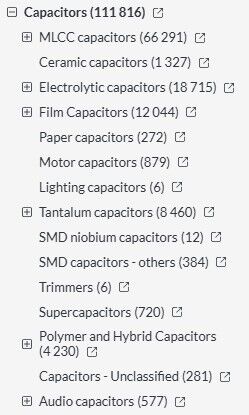
The TME offer includes over one hundred thousand capacitors of various types, but their fundamental function is the same for every kind – storing electric charge.
On the TME website, capacitors are divided by dielectric, which is the material the capacitor is made from. There are dependencies that allow the use of a replacement with a different dielectric than the original, but it is safest to use exactly the same material.
Some capacitors are polarized elements, meaning there is only one correct way to connect them. Using such a capacitor as a replacement for a non-polarized capacitor may risk damaging the element or the entire device.
Let's get to work!
Let's assume our BOM specifies the use of a Kyocera AVX MLCC capacitor with the number 04025C104KAT4A. Unfortunately, the TME website shows it as out of stock.
The first step is to open the product card.
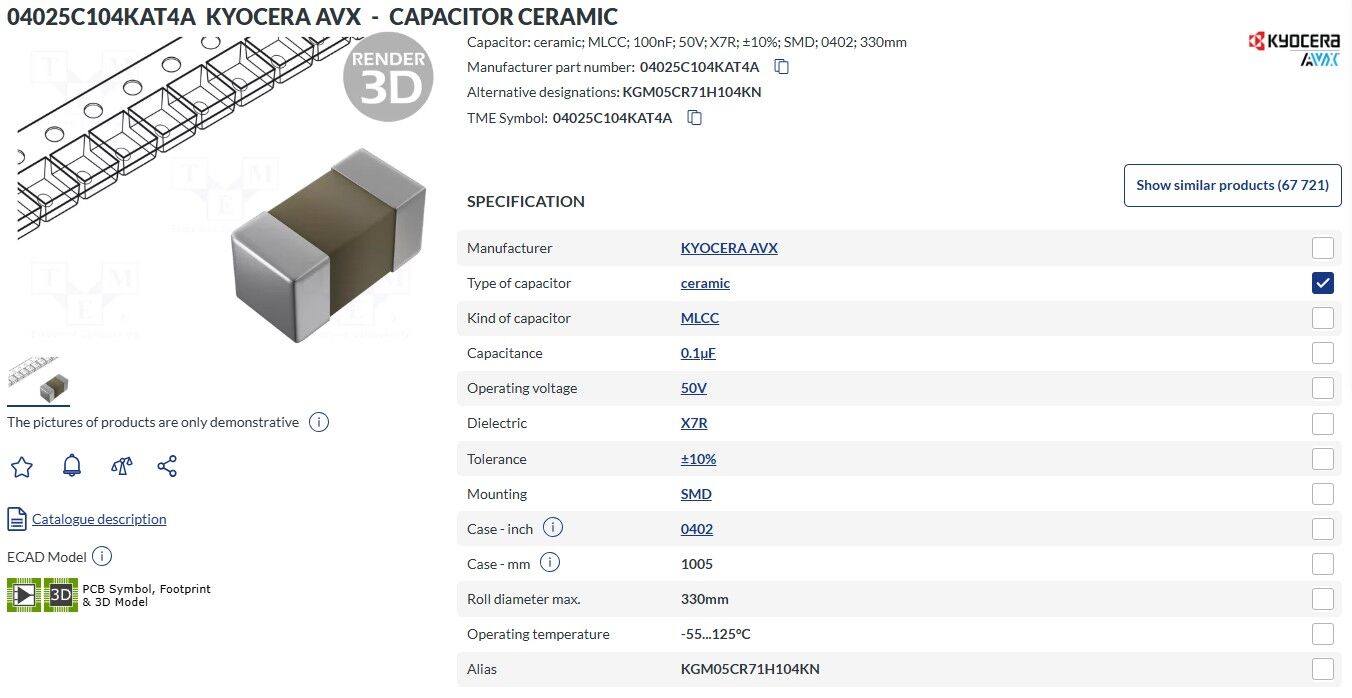
The specification is quite extensive, but what really matters are 7 parameters:
- Mounting
- Capacitance
- Operating voltage
- Dielectric
- Tolerance
- Operating temperature
- Case – inch / Case – mm
Mounting
Mounting indicates how the component is connected to the circuit. Most often we find versions: through-hole (THT technology), surface-mounted (SMT/SMD), connector-form terminals, and screw-fastened and connected. Some elements have screw mounting, but connections in a different format.
Here, we must choose a replacement exactly like the original – if we want to avoid significant changes in the circuit design (or production process).
Capacitance
Capacitance is a parameter defining the capacitor's ability to store charge.
It is best to select a replacement with the same capacitance as the original part. And if exactly that capacitance is not available? Then look at the next parameter – tolerance.
Tolerance
Tolerance describes the maximum standard deviation of the actual value of the fundamental parameter from the nominal value.
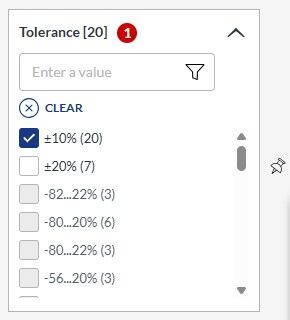
A 100nF capacitor with 10% tolerance means the actual capacitance is between 90...110nF. Theoretically, this means using such a capacitor was tested for correct device operation, as the capacitance is within this range. Using a 95nF capacitor with 5% tolerance, the system will work correctly (as long as the other component parameters are properly chosen).
When individually using replacements (e.g., repairing electronic devices), good practice is to check if the replacement's actual capacitance falls within the range defined by the original's capacitance and tolerance.
Special care should be taken when reading the capacitor's capacitance, specifically the units used (manufacturers use various conventions!). For clarity, here are orders of magnitude in the metric system:
| Name | Symbol | power |
Decimal multiplier | Example |
|---|---|---|---|---|
| pico | p | 10⁻¹² | 0.000 000 000 001 | pF – picofarad |
| nano | n | 10⁻⁹ | 0.000 000 001 | nF – nanofarad |
| micro | µ | 10⁻⁶ | 0.000 001 | µF – microfarad |
| milli | m | 10⁻³ | 0.001 | mF – millifarad |
Operating voltage
Operating voltage is a parameter describing the maximum voltage at which the capacitor will operate correctly.
A capacitor is a passive element and does not generate energy, so the voltage on the capacitor will be whatever is applied to its terminals. Note that device manufacturers do not use capacitors rated exactly for the voltage present in the circuit. Components with higher ratings are always selected. Such practice extends the capacitor's lifetime.
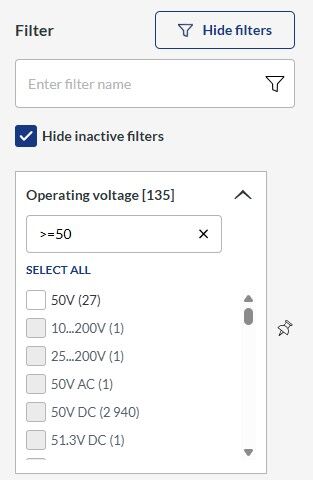
Therefore, our 100nF/50V 10% capacitor can be replaced with another 100nF capacitor with a higher voltage rating, but not a lower one.
Film capacitors have dual voltage ratings for direct and alternating current (DC and AC). In this case, we proceed the same, but both values should be equal to or higher than the replaced capacitor.
Dielectric
The simplest capacitor model is two electrodes separated by electrical insulation.
The dielectric is precisely this insulation. There are many dielectric materials used in capacitors, each with entirely different characteristics. In most cases, this means our replacement should use the same insulator as the original part. The only exception is electrolytic capacitors, where a polymer or hybrid capacitor can be used instead of an electrolytic one.
Operating temperature
This is the temperature range in which the capacitor will operate properly, meaning according to the description resulting from the manufacturer's laboratory tests. Temperatures at the extremes of this range can cause operation parameter changes even beyond tolerance. This is because nominal component values are given for operation at 25°C.
Thus, when looking for a replacement, you should treat the temperature range the same way as voltage – the substitute component's values should be equal or broader than the original's.
Case – inch / Case – mm
Case inch and mm indicate the dimensions of the case according to industry standards. This marks the length and width of the capacitor. Height is not given because, in the vast majority of cases, an MLCC component will be several times lower than other elements. For tantalum capacitors, letter designations will be added, and other capacitor types will have direct descriptions of body dimensions, i.e., diameter, height, and lead pitch (distance between capacitor "legs").
Distinguishing between millimeter- and inch-defined cases is crucial. For example, a case size of 0402 in inch notation corresponds to 1005 in millimeters.
What's very important: there are also SMD components with an inch size of 1005 (much larger), and even millimeter cases of 0402 (much smaller). Therefore, special attention must be paid to the dimensions and scale of the replaced component.
If the BOM does not include dimensions (though it should), tools (even a simple caliper), magnifiers, special templates, etc., can help identify the case size.
For elements where the case format is replaced with body dimensions and lead pitch, focus on selecting the correct pitch. The body dimensions need not be similar – just fit the space left by the PCB and circuit design.
Other parameters
Capacitors may be described by many more parameters. Other properties of interest might be:
Operating current / maximum operating current – the maximum current the capacitor can handle; this should be equal or higher than the original.
Maximum pulse current – selected similarly to operating current.
Impedance / ESR resistance – these parameters describe the capacitor's resistance and affect the frequency characteristic of the circuit. This parameter should be a 1:1 match.
Replacements from the product card level
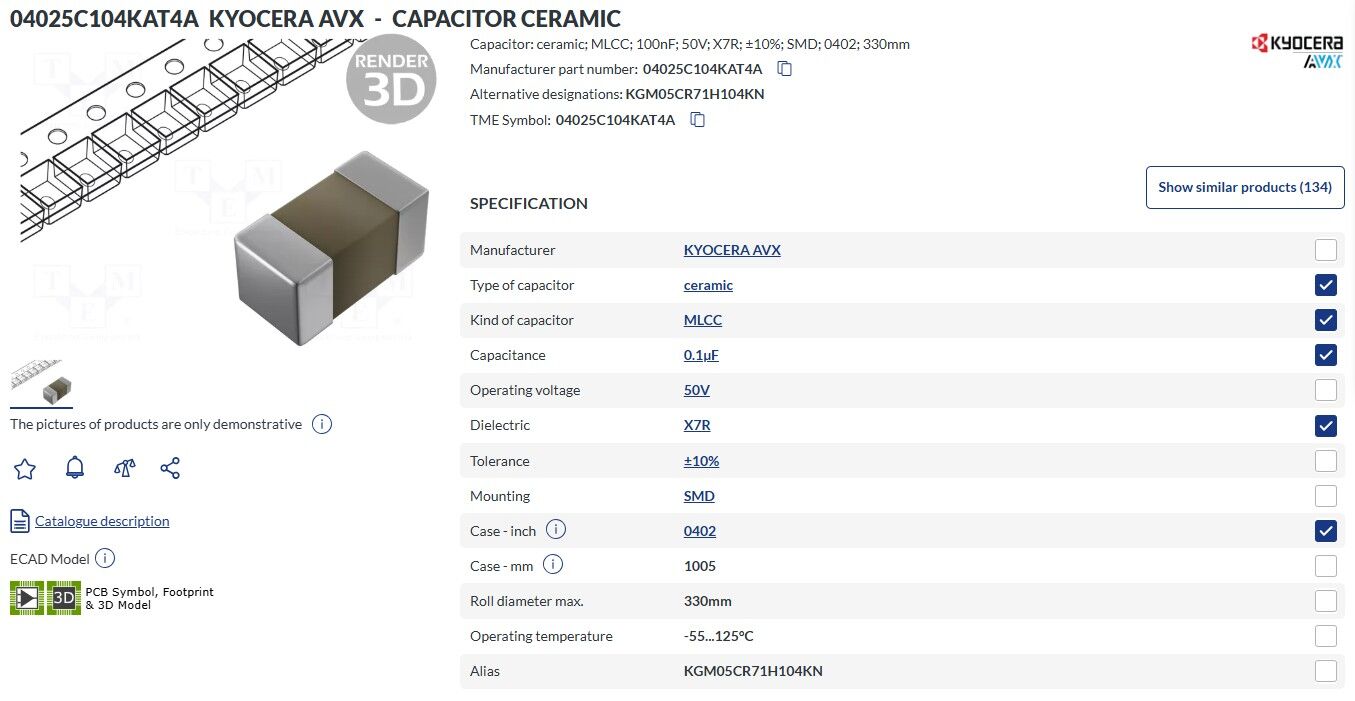
The TME catalog is designed to optimize component replacement searching. First, go to the product card of the original part.
In the specification list, mark the parameters that must be exactly the same. For safety, capacitance is also selected. In this case, a surface-mounted element with specific dimensions (0402) is sought. Therefore, mounting type was not selected – but in many other cases, it should be to avoid errors.
As shown in the attached screenshot, the set parameters allowed finding 134 similar products.
Clicking "Show similar products" will show all capacitors with parameters exactly matching the selected ones. However, as explained earlier, not all must be identical.
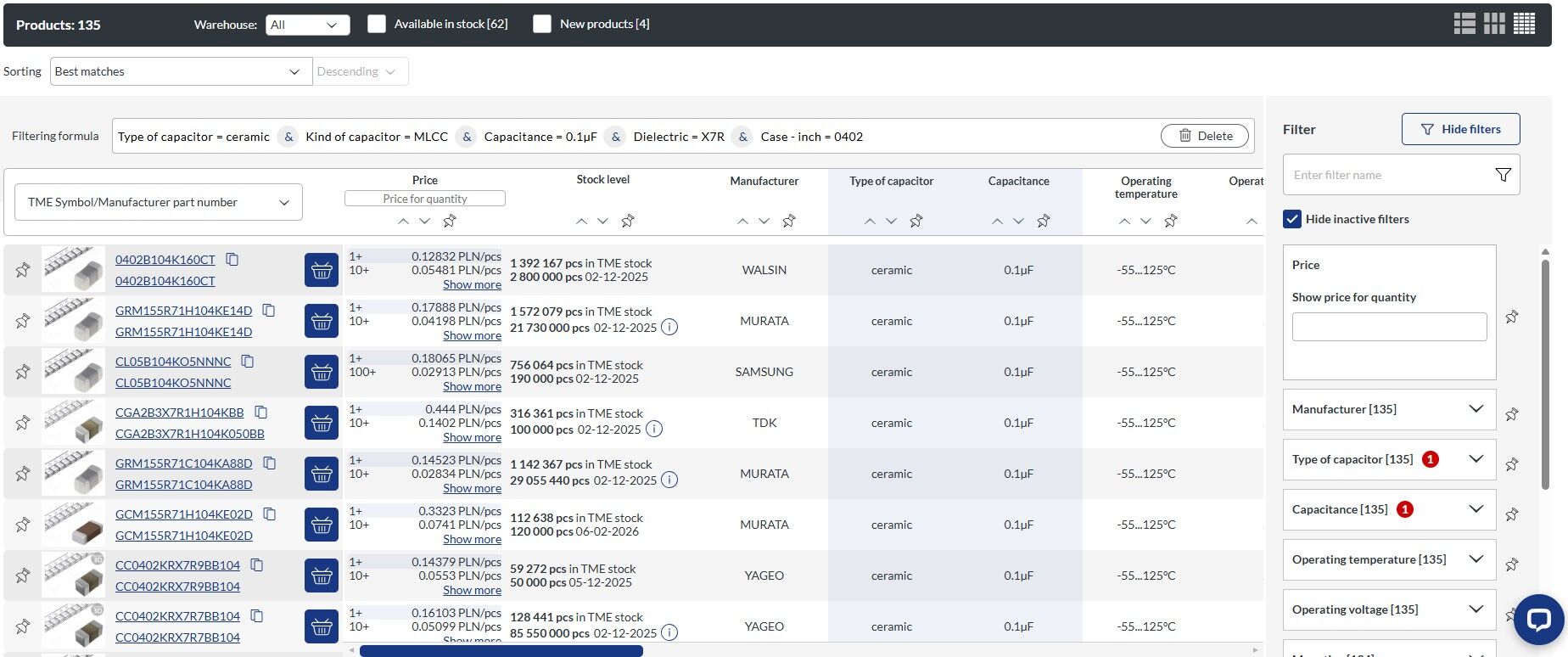
We still need to select the missing key parameters.
That is higher or equal voltage and the same or lower tolerance:
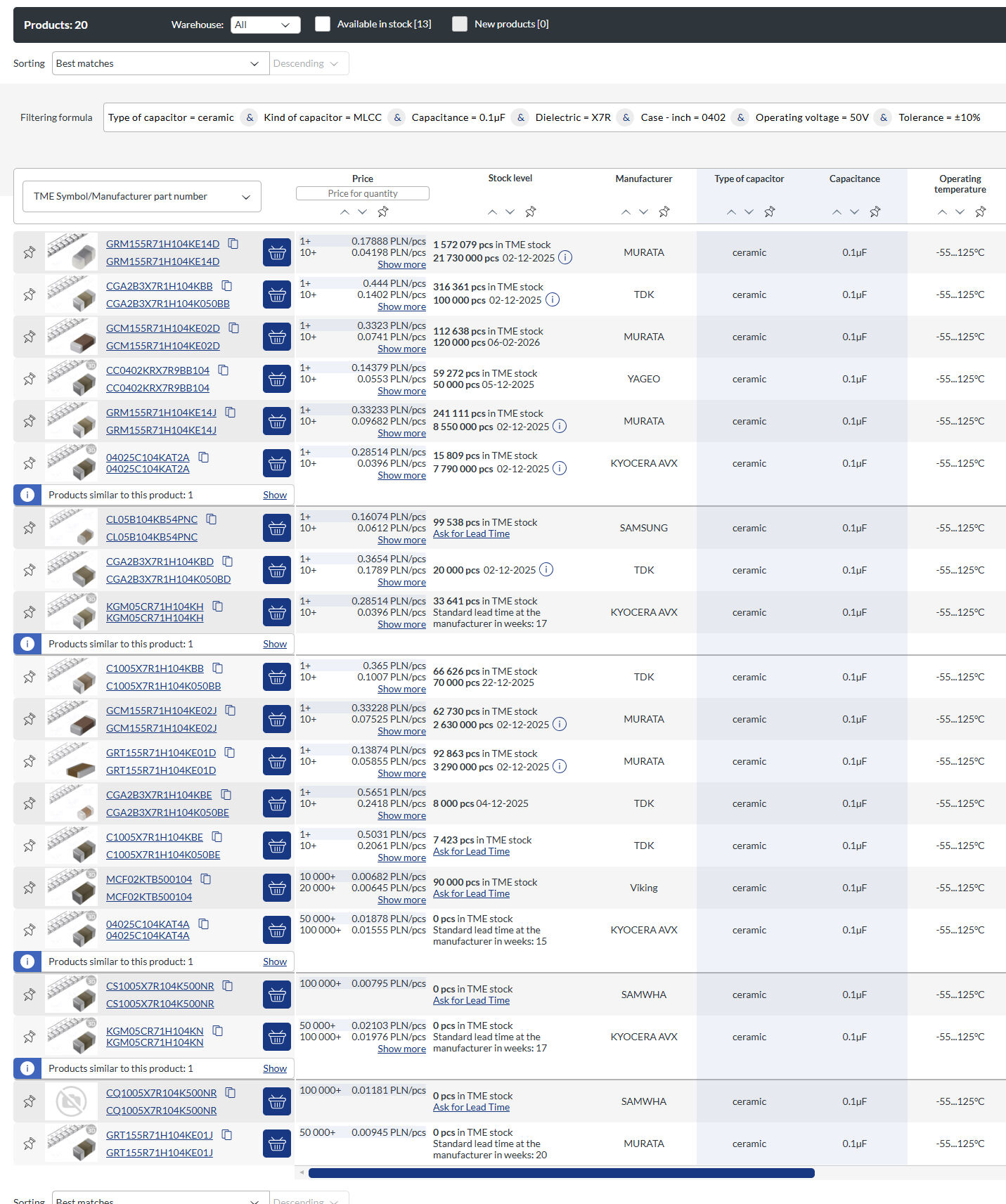
It is also worth checking the "Available in stock" option – this will give a list of components that we supply directly from TME, which means lightning-fast shipping.
Exceptions
Of course, there are always exceptions. In the case of capacitors, care must be taken with safety and PFC capacitors.

Safety capacitors can be found via the "Capacitor type" filter and include interference suppression capacitors X1, X2, Y1, and Y2.
For these components, we must ensure the replacement has exactly the same markings (X1, X2, etc.).
Another case is capacitors for power factor correction (PFC).
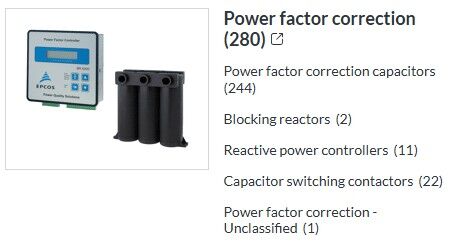
These capacitors are located elsewhere on the site, but their operating principle is exactly the same.
For these, manufacturers list Reactive power as the main parameter. The reactive power of the capacitor depends on many factors, including operating voltage. Therefore, some suppliers specify multiple powers and voltages for one element.
So, how to choose a replacement? Make sure capacitance is the same for both replacement and original (considering tolerance). Current and voltages must be equal or higher.
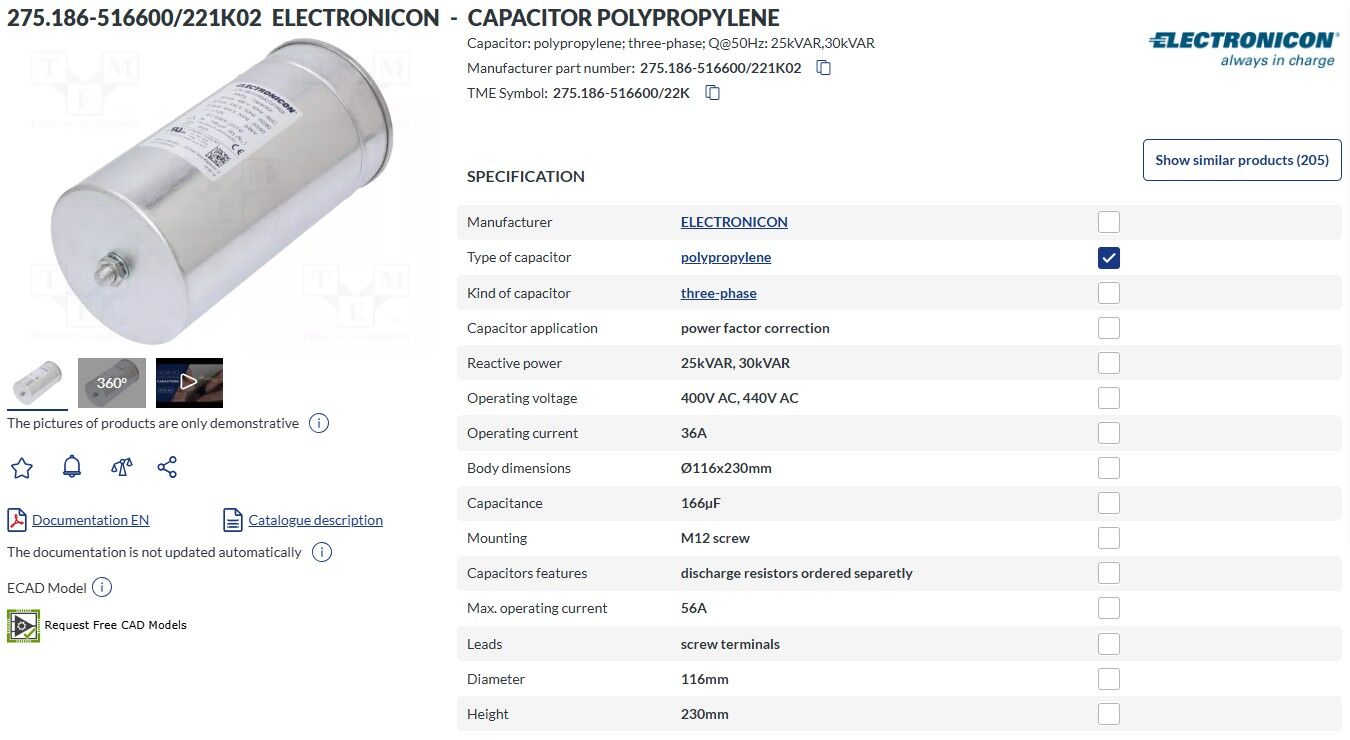
As seen in the above screenshot, the ELECTRONICON capacitor shows compensated power values for two voltages, meaning it can serve as a replacement for capacitors rated for 400V and 440V AC.
Summary
The unavailability of a specific catalog number doesn't have to be a problem; replacements can always be used, but selecting them requires focus and knowledge of the parameters involved. It is essential to remember many dependencies and consequences arising from changing each parameter. In case of any doubts, it is best to consult TME specialists. We welcome you!
Transfer Multisort Elektronik (TME) is one of the world’s largest global distributors of electronic components, electrotechnical parts, workshop equipment, and industrial automation. The catalog includes over 1,500,000 products from 1,300 leading manufacturers. TME’s modern logistics centers in Łódź and Rzgów (Poland), with a combined area of over 40,000 m², ship nearly 6,000 packages daily to customers in more than 150 countries.
TME also invests in the development of knowledge and skills of young engineers and electronics enthusiasts through the TME Education project, and supports the tech community by organizing the TechMasterEvent series, promoting innovation and experience exchange.