Noise protection methods
Noise protection methods게시 날짜: 28-02-2024 🕒 5 읽기 시간
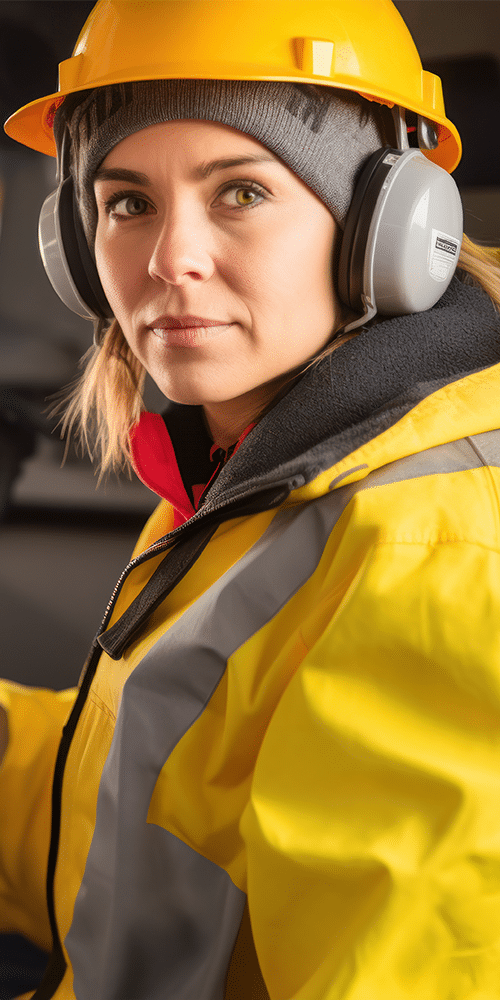
Hearing protection is important in numerous situations, in particular when we are exposed to loud noise or long-term sound emissions, which applies not only to work-related settings, but also e.g. to motor sports, shooting, and military environments (active headphones integrated with the helmet). Noise-cancelling headphones or other hearing protection measures are indispensable to protect our health and ensure the comfort of work.
- What level of noise causes hearing damage?
- Can damaged hearing regenerate and how to protect it?
- Impact of noise on our well-being
- Where should hearing protection measures be worn?
- Hearing protection products
- Active and passive hearing protectors
Hearing is one of the most important senses. Thanks to it, we can perceive and interpret sounds. Protecting your hearing is crucial to remain healthy and maintain the desired quality of life.
Which decibel level can damage your hearing?
Our hearing can be damaged when we are exposed to sounds with a high decibel (dB) level. There are general guidelines specifying possibly harmful noise levels:
- 85 dB: long-term (8 hours or more) exposure to sound at the level of 85 decibels may result in hearing damage. Such noise is generated by street traffic or a lawn mower.
- 100–110 dB: noise within this range, e.g. loud music on headphones, may result in hearing damage after only 15 minutes of exposure.
- 120 dB: noise at this level and beyond may be immediately harmful to hearing. Examples include an emergency siren sound or a rock concert.
- 140 dB: an extremely hazardous noise level which may result in instantaneous hearing damage. Here, examples include gunshots and jet engine operation.
Note that hearing damage can be cumulative, i.e. long-term exposure to lower noise levels can be just as damaging as short-term exposure to higher noise levels. It is therefore important to protect your hearing during exposure to loud noise, even if it does not cause immediate damage.
Note also that even one-off, short-term exposure to very high noise levels may cause permanent hearing damage. It is referred to as “an acoustic injury” resulting from a sudden, intensive noise emission, e.g. a gunshot, explosion or very loud music during a concert. The key factors include:
- Decibel level (dB): the higher the decibel level, the greater the hearing damage risk. Noise exceeding 120 dB may cause instantaneous hearing damage.
- Sound source location: small distance from the source of loud noise increases the hearing damage risk.
- Sound nature: sudden, pulse-like sounds (e.g. gunshots or explosions) are more damaging that constant noise exposure.
Hearing damage may involve temporary or permanent hearing loss (trauma-related hearing loss), or tinnitus (constant ringing in your ears). If you experience any hearing damage symptoms following exposure to loud noise, contact a medical professional.
Can damaged hearing regenerate?
As opposed to other human body functions, hearing can regenerate within a very limited scope. Noise-induced hearing loss is mainly caused by damage to the hair cells in the inner ear, which convert sound waves into nerve signals that get interpreted by the brain as sounds. Unfortunately, human hair cells are not prone to regenerate naturally. Their damage or destruction usually results in permanent hearing loss. In some cases, short-term exposure to loud noise may result in temporary hearing damage. In such situations, hearing may be partially or completely restored after some time, provided further exposure is avoided.
How to protect your hearing?
In all circumstances where the noise level is beyond our control, disposable and multiple-use noise-reducing inserts, noise-cancelling headphones or noise-reducing earmuffs adjusted to the actual noise levels, personal preferences and abilities must be used. Thanks to choosing protection measures carefully and reasonably, you can protect your hearing effectively, which is of crucial importance both in terms of your health and your general well-being and performance.
Noise impact on personnel’s health
Working in a noisy environment may exert significant impact not only on employees’ hearing, but also on their overall physical and emotional health and performance. See below for a few potential adverse effects:
- Stress and emotional issues: Permanent exposure to noise may result in increased stress levels. Chronic stress is linked to a number of health problems, including high blood pressure, heart diseases, as well as mental health problems such as anxiety and depression.
- Sleep disorders: Workplace noise may exert adverse impact on employees’ sleep quality, even after they return home. Sleep disorders typically result in fatigue, bad mood and impaired concentration.
- Inadequate performance: Long-term noise exposure may affect the concentration and attention span, which has direct influence on performance levels. Exposed employees may find it difficult to perform tasks which require focus and precision.
- Communication: Noise may impair communication between employees, which may result in misunderstandings and mistakes at work, as well as frustration and conflicts within teams.
- Fatigue and headaches: Permanent noise exposure may cause chronic fatigue, headaches and muscle tension, which also affects overall employees’ well-being.
In order to prevent these negative effects, employers should apply the necessary countermeasures described above. In addition, hearing protections applied under the OHS regulations should also include such measures as minimising noise in the workplace through appropriate soundproofing, providing regular breaks for employees, and educating them about the impact of noise on health and performance. Of course, monitoring noise levels and complying with the applicable occupational health and safety regulations is the most important prerequisite here.
What tasks must be performed to ensure hearing protection?
Numerous job positions related to the operation of automation systems require hearing protection, especially in facilities where personnel is exposed to the noise generated by machinery, equipment or manufacturing processes. In such working environments, noise-cancelling headphones or OHS protective earmuffs (ear defenders) are necessary. Here are just a few examples:
- Operators of machines such as presses, lathes, milling machines.
- Maintenance technicians responsible for the repairs and maintenance of industrial machinery.
- Automation engineers who design and implement automation systems.
- Production line operators running automated production lines, especially in the heavy industry applications.
- Processing plant personnel operating automated cutting, packing or sorting machines.
Such job positions require wearing adequate hearing protection measures, such as in-ear inserts or earmuffs, to mitigate the risk of hearing damage.
Noise-reducing earmuffs and hearing protectors
Noise-reducing earmuffs and hearing protectors are measures used to protect hearing against the detrimental impact of excessive noise levels. They are indispensable both in workplaces where high noise levels are generated and in certain everyday circumstances. See below for details regarding such measures:
Noise-reducing earmuffs (ear defenders)
Noise-reducing earmuffs (ear defenders) are external hearing protectors which cover all ears. They consist of soft cushions filled with a sound-absorbing material, which tightly surround the ears, and a hard, often plastic, outside casing. They are used in high noise level environments, such as industrial facilities, construction sites, workshops, shooting ranges or airports. When worn for prolonged periods of time, they might cause certain discomfort, particularly in high temperature conditions, as they induce sweating around the ears.
Noise-reduction earmuffs (ear defenders) offered by TME
Hearing protectors (earplugs)
Hearing protectors, often referred to as earplugs, are small pieces inserted directly into the ear canals. They are typically made of foam, silicone, wax or special elastomer-based materials, whose shape adjusts to the ear canal shape.
They are used in various situations ranging from work in moderately noisy environments to protecting one’s hearing at concerts, to helping people fall asleep in noisy environments. Well-fitting earplugs may be effective in cancelling noise, although, at very high noise levels, their effectiveness can be slightly lower than in the case of noise-reduction earmuffs. Simultaneously, they are usually more comfortable to wear for longer periods and less conspicuous than earmuffs.
The choice between earmuffs and earplugs depends on the users’ specific needs, noise level they wish to reduce and their individual preferences related to comfort and convenience. Note also that both types of ear protection measures should be properly fitted and used as specified to provide effective hearing protection.
Passive and active hearing protectors
Hearing protectors are divided into two main types, i.e. passive and active protectors, and their effectiveness is measured using different methods and indexes. See below to check what each of these terms actually means:
Passive hearing protectors are the simplest and most commonly used hearing protectors that cancel noise by physically blocking or restricting the flow of sounds into the ear. They include earplugs and noise-reducing earmuffs.
Active hearing protection requires advanced equipment fitted with electronic circuits designed to reduce noise. They ensure active noise control (ANC) using external microphones to detect ambient sounds and then generate a counter-phase signal to neutralise undesirable sounds. Some models amplify quiet sounds, such as speech, while cancelling loud noises.
Transfer Multisort Elektronik (TME)은 전자 부품, 전기 기술 부품, 작업장 장비 및 산업 자동화의 세계 최대 글로벌 유통업체 중 하나입니다. 카탈로그에는 1,300개 주요 제조업체의 1,500,000개 이상의 제품이 포함되어 있습니다. Łódź와 Rzgów (폴란드)에 있는 TME의 현대적인 물류 센터는 총 면적이 40,000 m² 이상이며 매일 약 6,000개의 패키지를 150개국 이상의 고객에게 발송합니다.
TME는 또한 TME Education 프로젝트를 통해 젊은 엔지니어와 전자공학 애호가들의 지식과 기술 개발에 투자하고 있으며, TechMasterEvent 시리즈를 조직하여 혁신과 경험 교류를 촉진하면서 기술 커뮤니티를 지원합니다。