Does the Raspberry Pi need a heatsink?
Does the Raspberry Pi need a heatsink?
Yes, the Raspberry Pi, especially version 5, definitely requires Heatsinks and preferably active cooling to maintain full performance and avoid overheating.
Why does the Raspberry Pi get hot?
The Raspberry Pi, despite its small size, is a full-fledged Single-board Computer (Single-Board Computer), with an integrated SoC (System on Chip) performing all major operations: from data processing to device control. The Raspberry Pi 5 uses a very powerful Cortex-A76 processor clocked at 2.4 GHz, which generates significantly more heat than previous models such as the Raspberry Pi 4. As the chip works with a heavier load, e.g. when using multiple applications, browsing the internet, playing video or compiling code, the processor temperature can quickly exceed safe levels.
What is throttling and why is it a problem?
If the Raspberry Pi reaches too high a temperature, a protection mechanism called thermal throttling is activated. It involves automatically lowering the frequency of the processor, and therefore its performance, to limit further temperature increases. The effect of throttling is a noticeable slowdown of the system. Applications respond more slowly, interfaces lose their fluidity and the overall user experience becomes less comfortable. Although this mechanism protects the hardware from overheating, in practice it means that the full potential of the device is not used.
What cooling is needed?
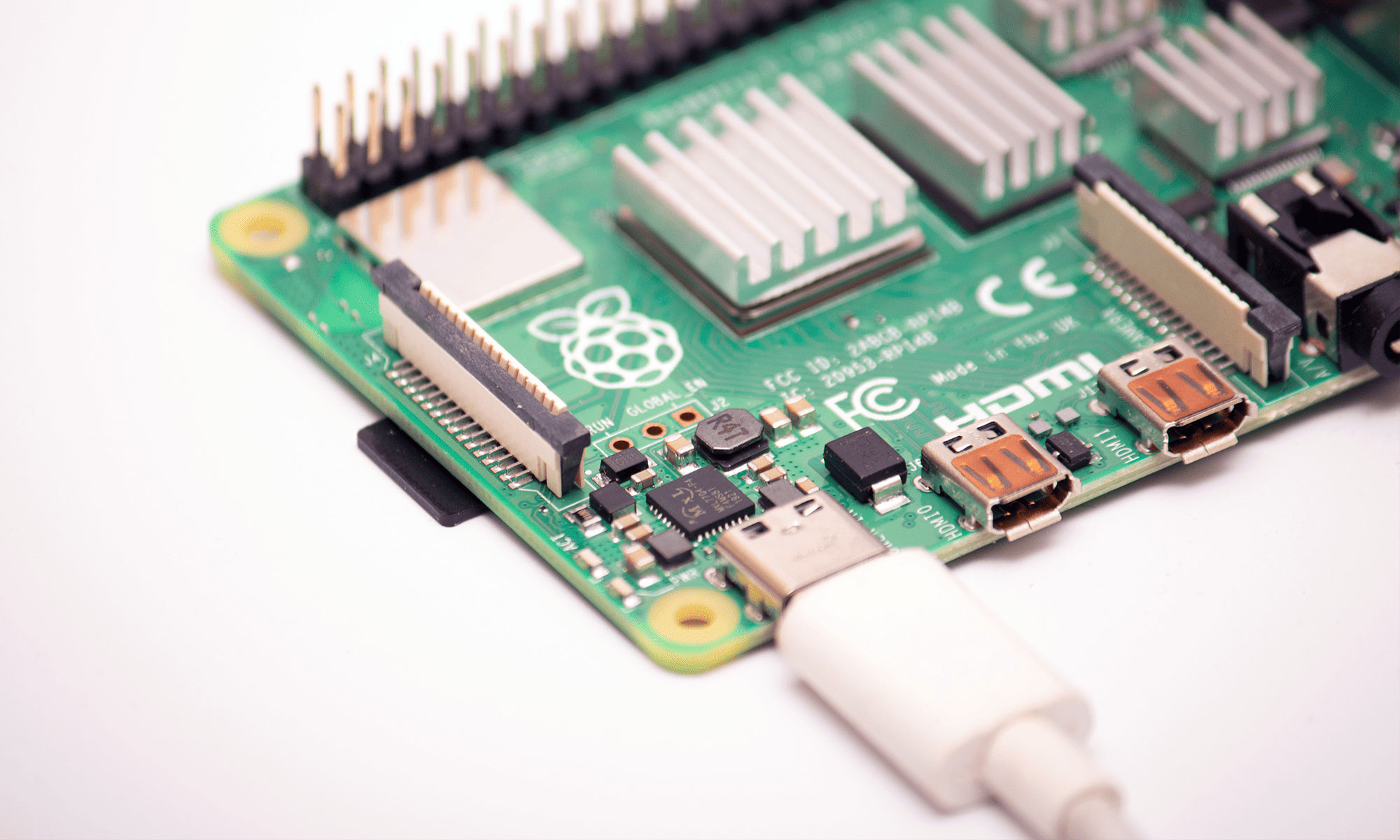
On the Raspberry Pi 5, passive cooling in the form of Heatsinks alone is not sufficient for prolonged operation under full load. Heatsinks that dissipate heat without a fan will only reduce the temperature by a few degrees (but a well-chosen one can reduce it by as much as 10-20°C), depending on the conditions and load. Under light load conditions this may be sufficient, but under intensive use overheating problems will occur. The recommended solution for the Pi 5 is active cooling, a combination of Heatsinks and fans. The official 'Raspberry Pi Active Cooler' is an example of such a system - it is small, easy to install and provides effective cooling even under prolonged CPU load. Tests show that, with active cooling, the Raspberry Pi 5 can maintain temperatures below 40°C under heavy use. It is worth mentioning that the Pi 5 has a dedicated PWM connector for controlling the fan speed. This means that the system can dynamically adjust the fan speed to the current temperature, improving comfort and reducing noise.
Do all models require cooling?
Not all Raspberry Pi models need cooling to the same extent. Older versions, such as the Raspberry Pi 3 or 4, can operate without a Heatsink under light load. However, even for these, the use of at least passive cooling significantly increases the stability and lifetime of the device. For the Raspberry Pi 5, cooling is no longer just a recommendation, but actually a prerequisite, if you plan to use its full computing power or use it as a desktop computer, server, development station or media centre.
Transfer Multisort Elektronik (TME) is one of the world’s largest global distributors of electronic components, electrotechnical parts, workshop equipment, and industrial automation. The catalog includes over 1,500,000 products from 1,300 leading manufacturers. TME’s modern logistics centers in Łódź and Rzgów (Poland), with a combined area of over 40,000 m², ship nearly 6,000 packages daily to customers in more than 150 countries.
TME also invests in the development of knowledge and skills of young engineers and electronics enthusiasts through the TME Education project, and supports the tech community by organizing the TechMasterEvent series, promoting innovation and experience exchange.