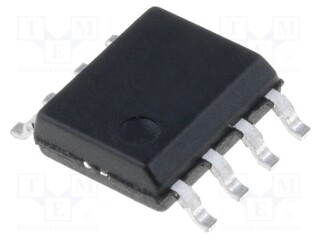
Hall Sensors
(384)The Hall sensor is a component with a wide range of applications in industry. It works successfully because of the Hall effect, which in short is based on the creation of a difference in electrical potentials in the magnetic conductor placed in the field where electric current flows. On the basis of this created voltage, values describing the electromagnetic field, such as magnetic induction, power or current are obtained. Hallotrons are formed mainly from indium compounds (indium antimonium or indium phosphide), which exhibit high mobility of charge carriers. Sometimes also graphene is used in the construction of Hall sensors. These sensors are widely applied in the automotive industry - in the fuel level indicators, in modules for adjusting the headlamps angle or in ABS systems, where they are supposed to measure the rotational speed of the wheels. Applications of a Hall sensor also include energetics, for example operation of current transformers in which a direct current value can be obtained by measuring the flux of magnetic induction.
Hall sensor in the TME offer
The TME catalog includes over 100 sensors which use the Hall effect. When you choose a Hall sensor it is worth looking at its working temperature and the type of sensor, among which we can distinguish bipolar, omnipolar, unipolar or rotary position sensors. Sensitivity of the sensor is also important - its relation to temperature and range of operation (depending on the type, for example, the rotary position or range of magnetic induction values). Moreover, in some applications, the supply voltage and the enclosure tightness class may also be very important. TME distributes products of such manufacturers as Allegro Microsystems, Honeywell or Infineon Technologies.
Warehouse: